Hanoi 특집호
Riding the Ha Giang Loop from Hanoi in Three Days
Three days out of Hanoi, stop by stop, with what you pay at each door and the day you have to leave if you want Đồng Văn market.

글: Rui MarquesTwo unhurried days, not nine temples
The clifftop outcrop known as the Skywalk, in Mã Pì Lèng village, has been closed and fenced since 1 July 2026, with no reopening date. The pass below it is a public highway, free to ride and free to stop on. Three days is the shortest version of the loop that fits the pass, the Tu Sản canyon boat and a swim at Du Già.
The pass and the Tu Sản canyon boat
Mã Pì Lèng Pass (QL4C) is what the three-day version of the loop is built around. The tarmac is cut into a sheer limestone cliff face, the hairpins are kerbed in low white stone, and the Nho Quế river runs 800m straight down in the gorge as a thin jade thread, with cloud often sitting in the valley under you. Riding it and stopping on it cost nothing, though a layby may charge ₫5,000 to ₫10,000 to park a motorbike. Small-group jeeps and bike convoys pull in freely, and the official laybys are narrow enough that they park nose to tail.
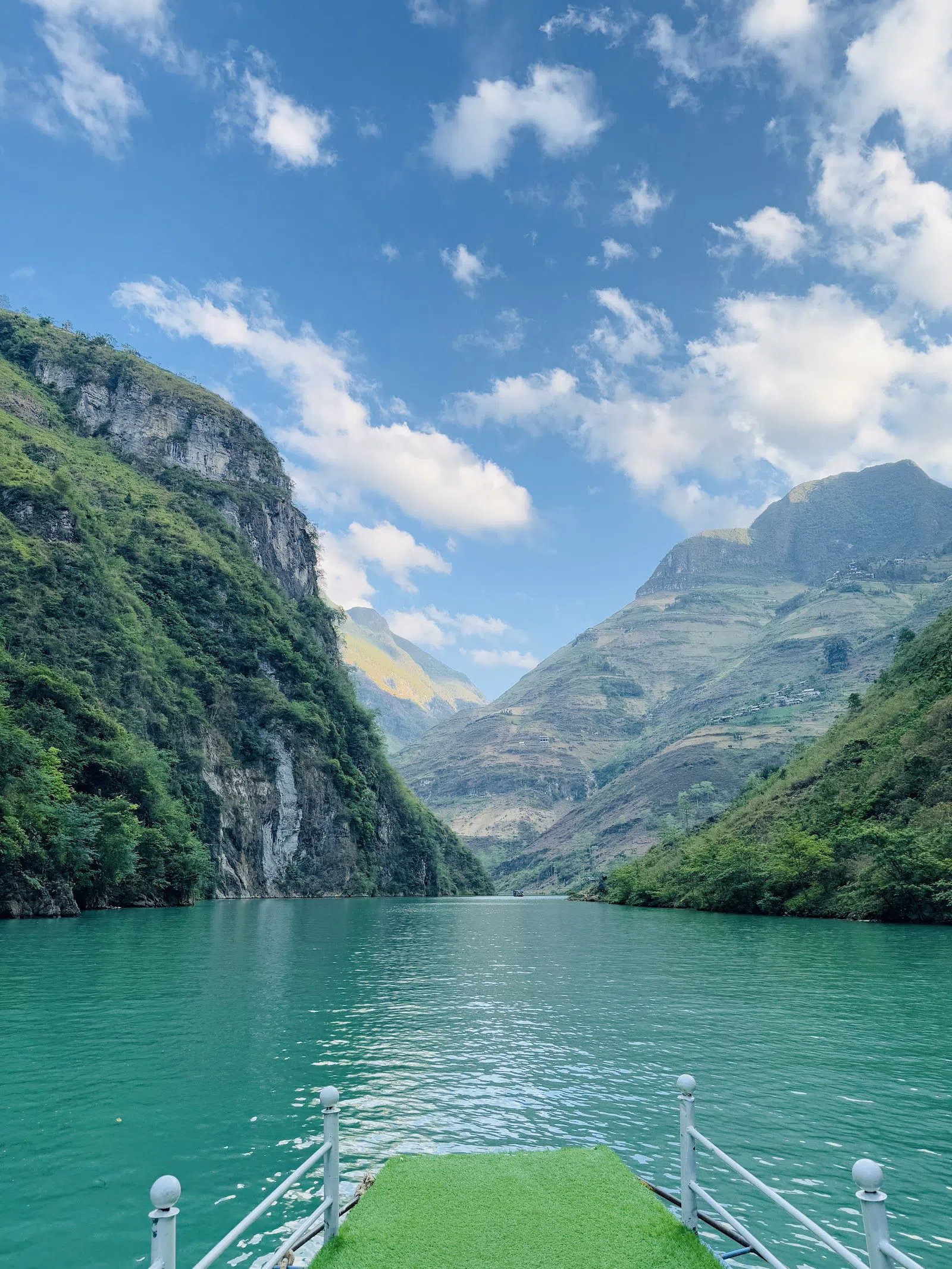
Nho Quế 1 Boat Pier (below Tràng Hương bridge) is where the canyon trip starts, and as of August 2026 it is the only legal dock on the river. Every informal villager-run landing, Tà Làng included, has been shut. The pier works daily from 07:00 to 18:30 and the run takes 45 minutes. Adult tickets are ₫120,000 to ₫150,000 and children ₫60,000, with parking at ₫10,000 for a bike and ₫20,000 for a car. Shared boats launch when they fill. A party of six to eight can take a whole boat.
The skiffs are long, narrow and green-and-white, everyone aboard wears an orange life jacket, and the grey limestone walls close in to a slot barely wider than the hull. Shuttle buggies run at the waterline beside the concrete pier.
The three days head north out of Hà Giang city on QL4C, turn at the border above Lũng Cú, cross Mã Pì Lèng to Mèo Vạc and come back south through Du Già. Nights fall in Đồng Văn old quarter or at the Mèo Vạc end of the pass. Door charges along the route are small and paid stop by stop.
Hanoi 여행 계획하기
예약 파트너의 실시간 가격입니다.
많은 객실이 무료 취소 가능합니다. 예약 시 당사가 수수료를 받을 수 있습니다.
Day one from Km 0 to Quản Bạ
Km 0 Milestone (riverside park off Nguyễn Trãi street, opposite 26/3 Square) is where loops start and finish. A squat stone block carved 'Km 0 Hà Giang' stands beside a second, rougher block, with the Lô river behind and loaded motorbikes lined up in front for photographs. It is free. Give it five minutes.
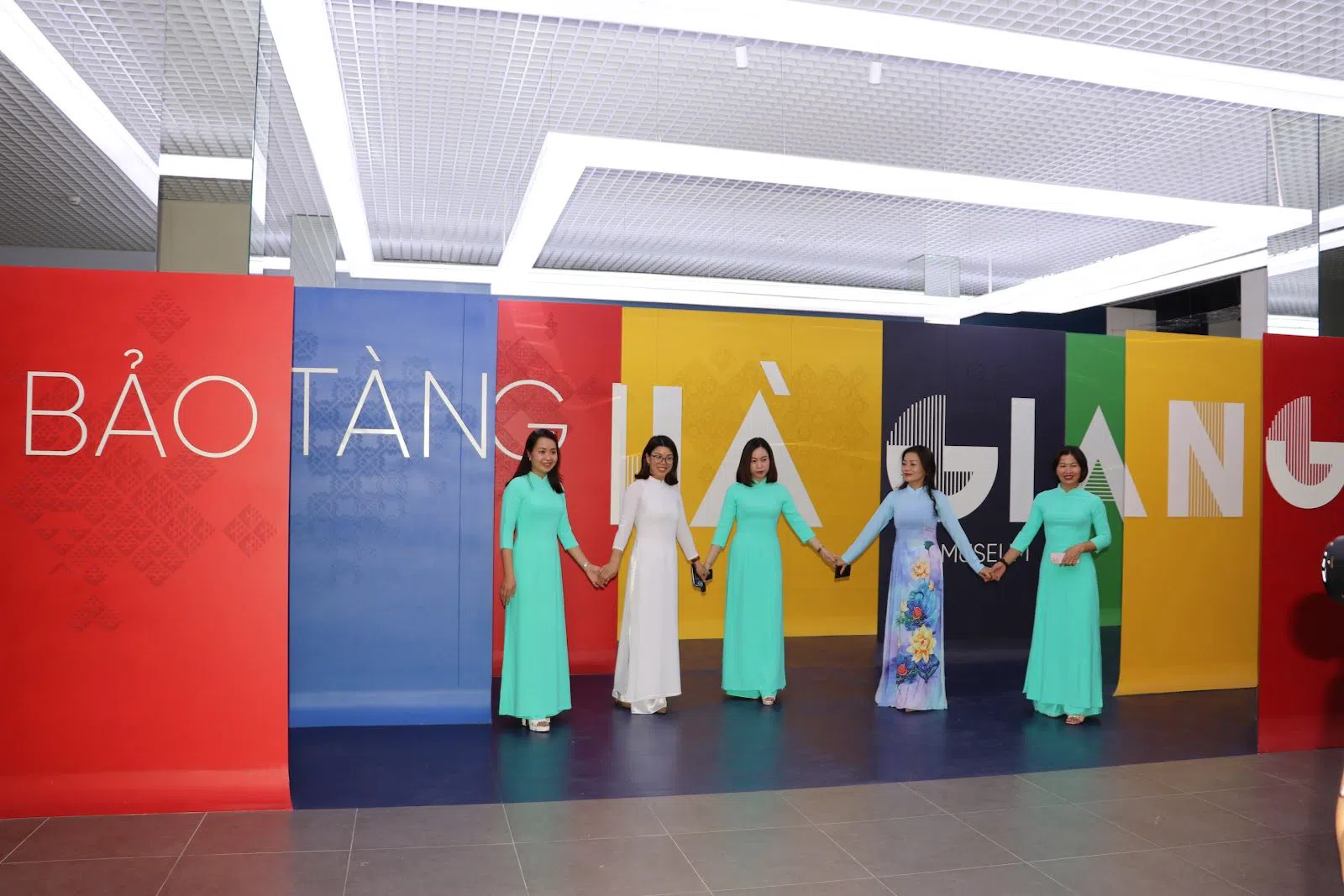
Arriving on the night bus from Hanoi leaves a gap before the riding starts, and Hà Giang Provincial Museum (148 Trần Hưng Đạo, near Yên Biên bridge) fits into it. The museum opens Tuesday to Sunday, 08:00 to 11:00 and 14:00 to 17:00, with evening hours on Friday and Saturday from 19:30 to 21:30. Entry is free to low and no standard ticket is advertised. Inside the low-rise civic building, Hmong, Tày, Lô Lô and Dao costume stands on mannequins alongside bronze drums, hemp looms and a relief model of the Đồng Văn karst plateau. It is quiet, and a tour party is usually the main footfall. Give it the hour and you will have names for the ethnic groups you meet over the next three days.
Quản Bạ Heaven's Gate & Twin Mountains is the first real stop out of Hà Giang city, where the drive turns into scenery. Two near-identical rounded green hills rise from a flat valley floor of paddy and maize, seen from a concrete terrace at a notch in the ridge with mist pooling below. The viewpoint is free. Parking or a coffee at the terrace stalls runs ₫10,000 to ₫20,000.

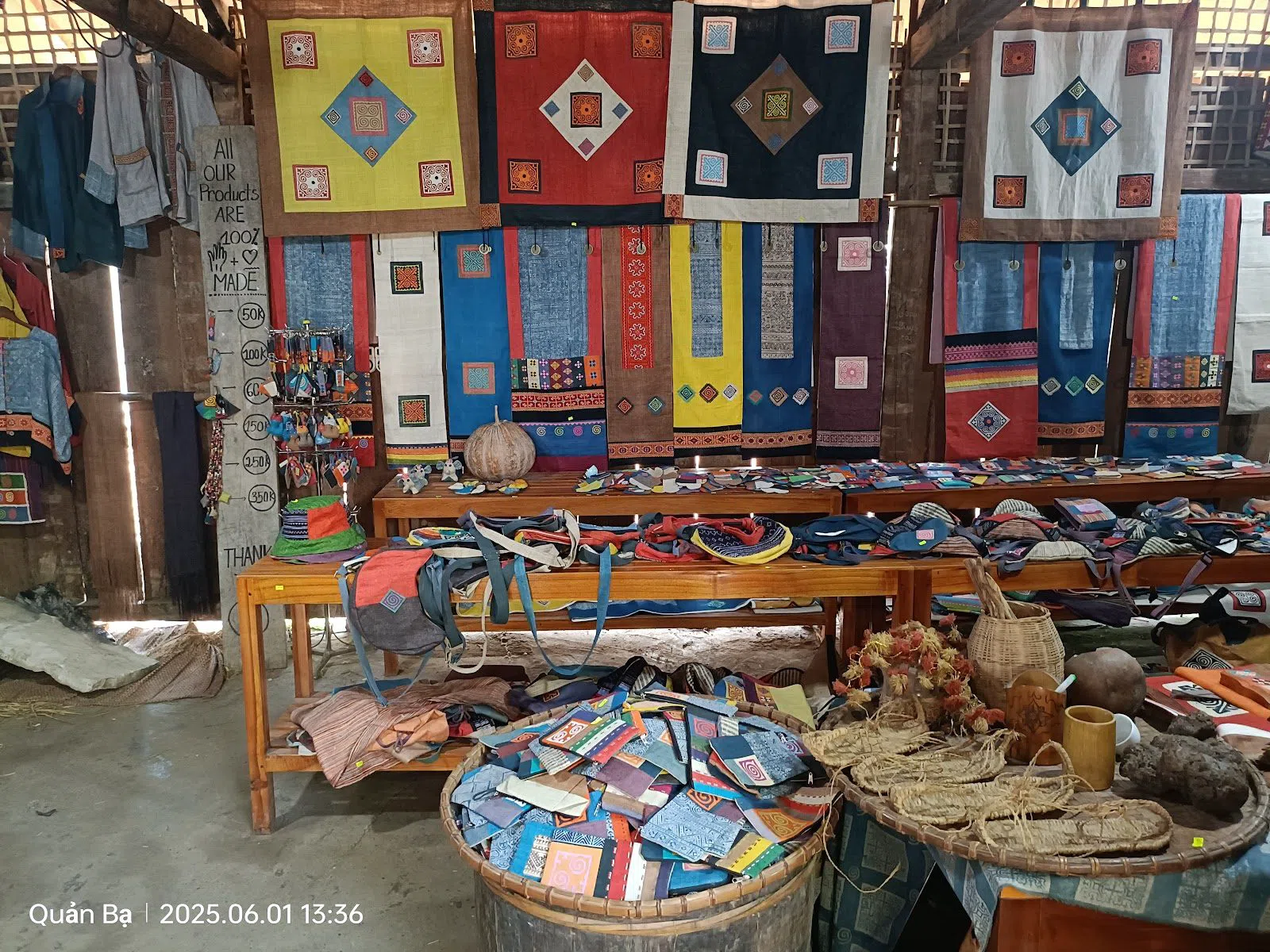
Lùng Tám Linen Weaving Cooperative (Quản Bạ) takes groups daily and demonstrates the process end to end. Women in indigo work wooden floor looms and twist hemp fibre by hand, hanks of thread dry on bamboo poles, dye vats stand with blue-stained rims, and finished brocade in hot pink and deep indigo is stacked on tables. Watching costs nothing. Scarves and runners start at ₫150,000. Lùng Tám hemp weaving is recognised national intangible cultural heritage, and the cooperative supports more than 150 women.
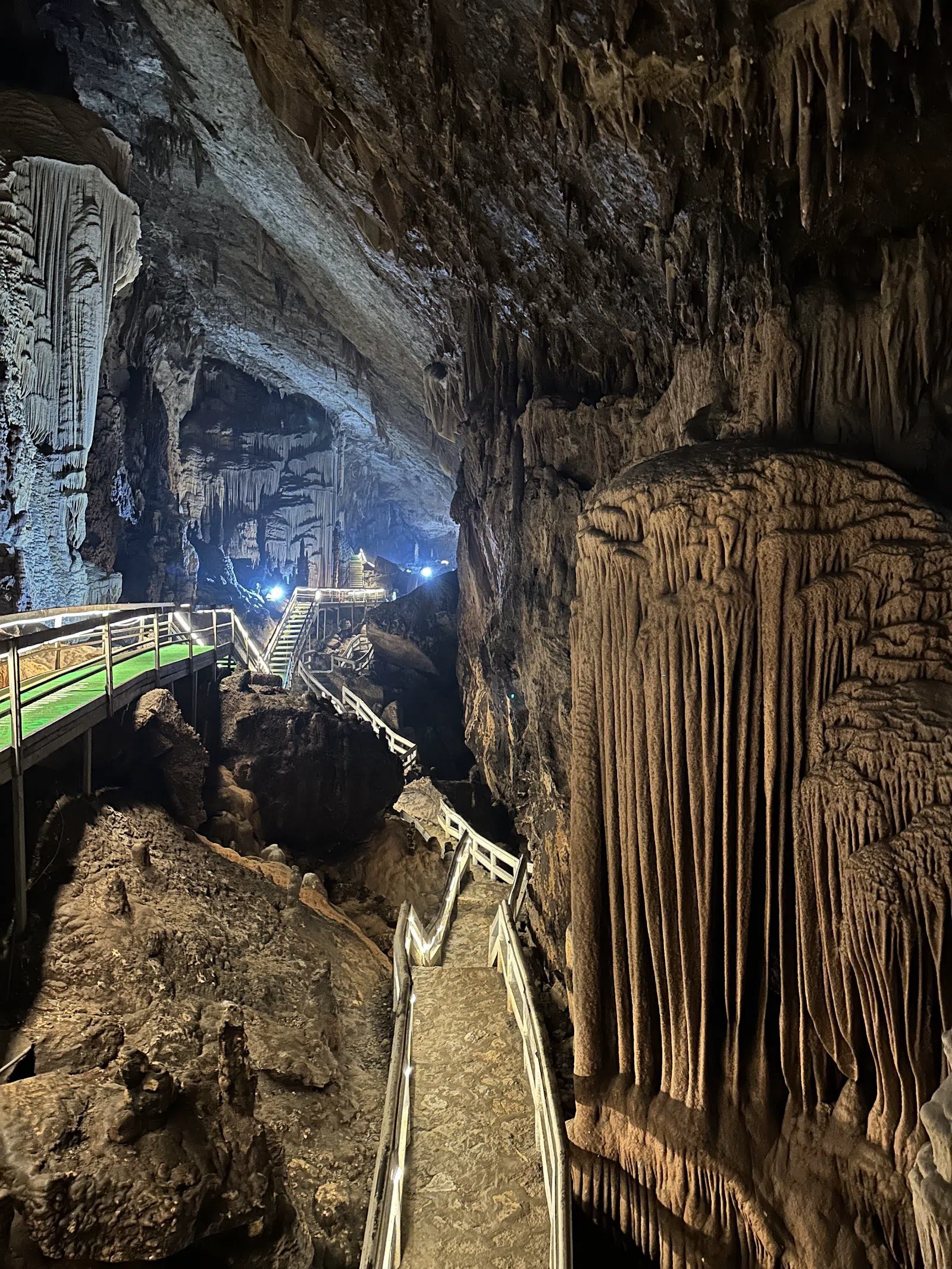
Lùng Khúy Cave (Quản Bạ) is the add-on on this stretch, and it takes thousands of visitors a year. The cave holds 1,000m of chambers, up to 200m wide, packed with stalactite and stalagmite columns lit in cold white and blue, with a steel walkway and handrails bolted over wet rock. Tickets are ₫50,000 for adults and children over 1.2m, free under 1.2m. The walkway is single-file. The approach is a long stepped path up the mountainside, which rules the cave out for anyone with poor mobility.
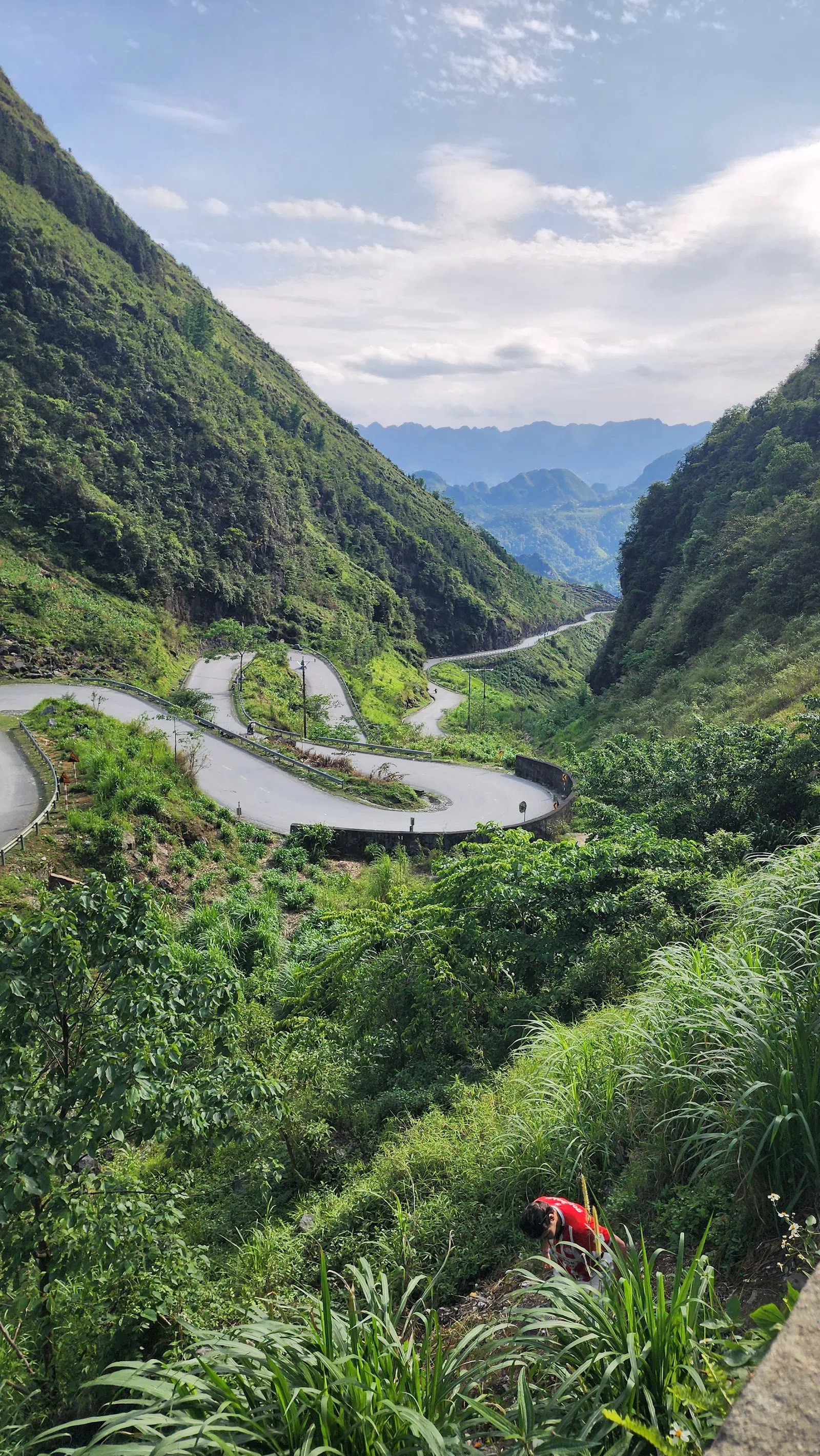
Tham Mã Pass and the Sủng Là valley
Tham Mã Pass (roadside pull-in on the Yên Minh stretch) stacks nine tight hairpins down a bare limestone hillside like a folded ribbon, and it is the leg-stretch between Quản Bạ and Sủng Là. Stopping is free, and the pull-in has room for jeeps and bike convoys. Hmong children wait at the top holding flat bamboo carrying-baskets. Photographing them costs ₫10,000 to ₫20,000.
Pao's House (Lũng Cẩm village, Sủng Là) is a 1947 Hmong courtyard house with rammed-earth walls the colour of wet clay, mossy yin-yang tiles, a polished stone threshold and wooden lattice windows, framed in season by yellow mustard or pink buckwheat. It was the set for the film 'Chuyện của Pao'. The Lũng Cẩm village gate and flower fields cost ₫10,000 to ₫20,000. It is a posed photo stop worth 10 minutes. The courtyard is small, and parties rotate through it.
Vương Family Mansion (Sà Phìn) is the history stop on the route, a Hmong-French-Chinese hybrid built on the opium trade and known locally as the Hmong King's Palace. Two storeys of dressed grey stone and dark hardwood enclose narrow courtyards under yin-yang tiled roofs with upturned eaves, the stone pillars carry carved opium-poppy motifs, and ancient conifers stand at the gate. It dates from the 1920s. Entry is ₫20,000 for adults, free for children under 1.2m. On-site guides walk parties through the courtyards, and the house gets tight when two tour vehicles land together.
Lũng Cú Flag Tower at the border
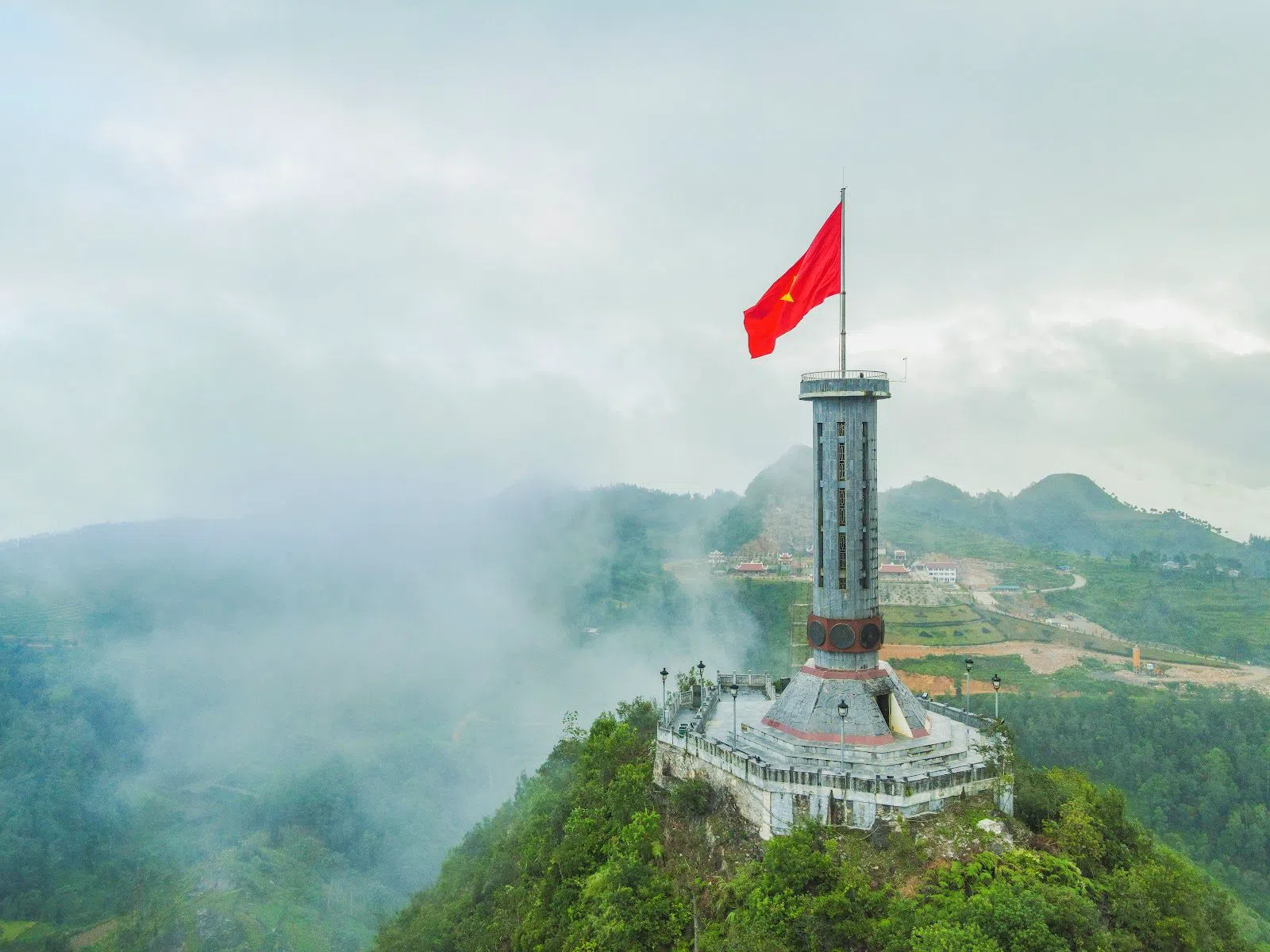
Lũng Cú Flag Tower is Vietnam's symbolic northernmost point, and the one stop on the loop where arriving is the whole point. An octagonal stone tower on a conical hilltop flies an outsized red flag with a yellow star, 389 stone steps spiral up the ridge to it, and patchwork maize terraces run back to the Chinese border ridgeline. Tickets are ₫25,000 for adults and free under 1.3m, plus ₫15,000 a head for the electric buggy up from the car park. A ticket booth, car park and buggies handle group arrivals. The climb is short and steep, the final stair is single-file, and a group strings out along it.
Nights in Đồng Văn old quarter
Đồng Văn Old Quarter is the standard night-one or night-two base on a three-day loop, and the one place on the route with street life after dark. A curved row of century-old two-storey clay-and-stone shophouses with yin-yang tile roofs and red paper lanterns faces a cobbled square ringed by karst peaks. Red plastic stools come out at lit doorways in the evening, and tour parties fill the terraces. Quarter entry is ₫50,000 where it is collected, free for children under 1.2m.
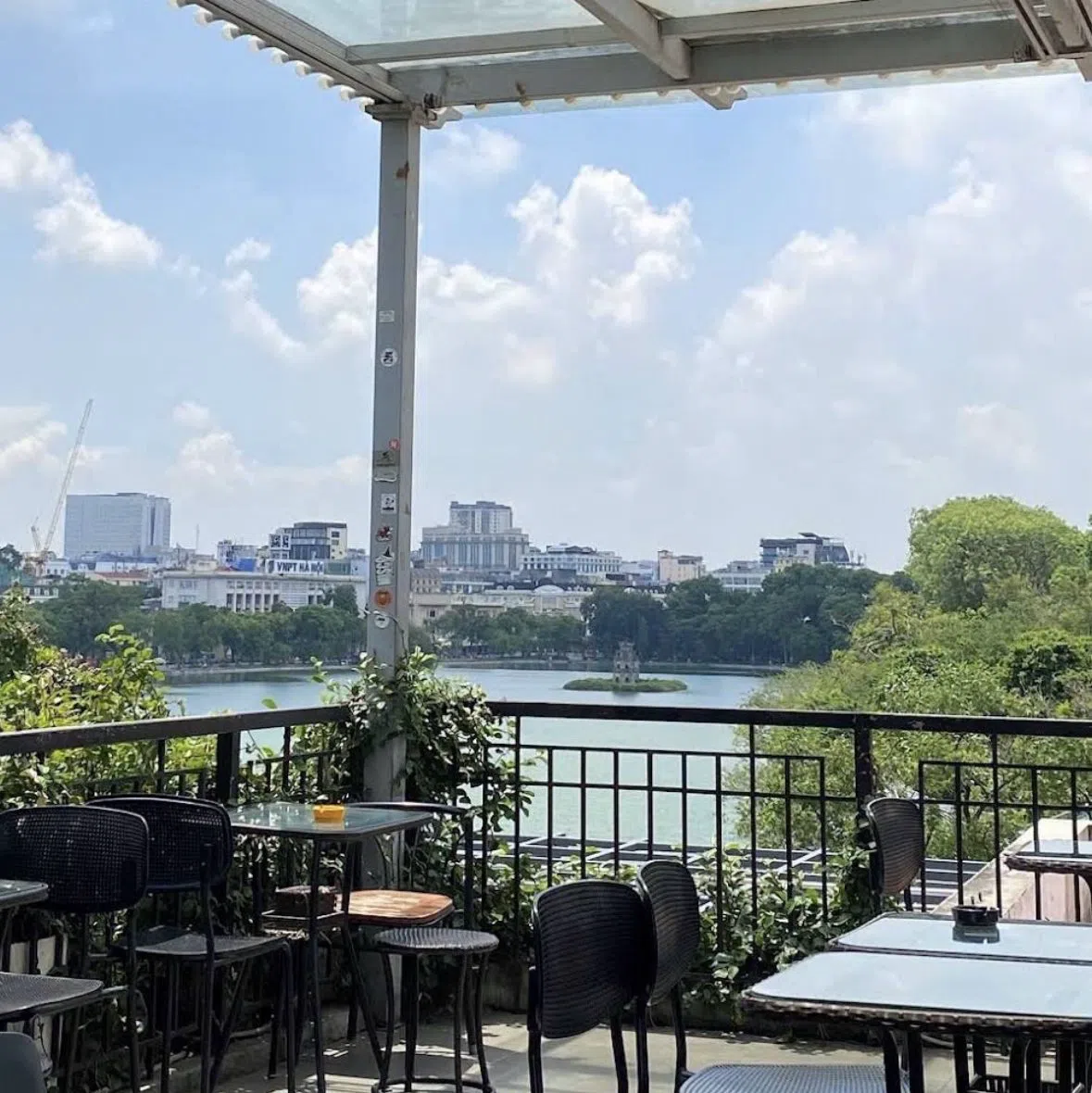
Cafe Phố Cổ (No. 2, Đồng Văn old quarter) opens from 06:30 to late, which covers a pre-dawn start and the evening after riding. The upstairs room is timber-framed with low wooden tables, the frontage is open to the stone square, and coffee arrives as phin drip in glass cups. Drinks are ₫25,000 to ₫55,000. The upstairs room and the frontage together seat a jeep-load. A party of 15 or more will overwhelm the place.
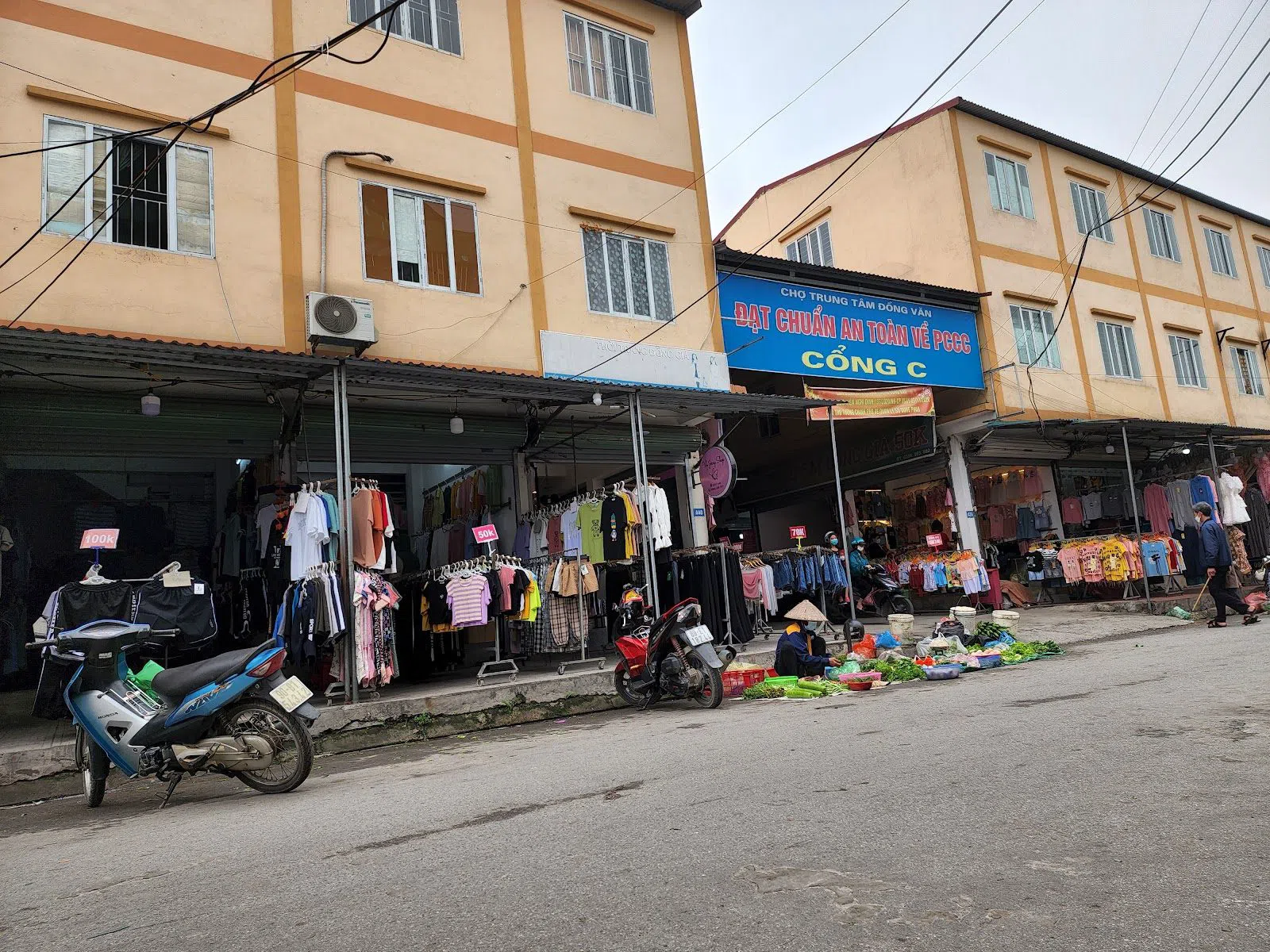
Đồng Văn Market trades as the big ethnic market on Saturday and Sunday mornings only, so the day your three days leave Hanoi decides whether you see it. Hmong women in pleated indigo and magenta skirts pack the flagstone floor of a French-era stone hall with squared pillars and a tiled roof, around flat baskets of maize and chillies, jars of corn liquor and buffalo meat on hooks. Walking in is free and a bowl of thắng dến is ₫20,000 to ₫50,000. This is working trade. Spread out, and ask before you photograph faces.
Sleeping at the Mèo Vạc end
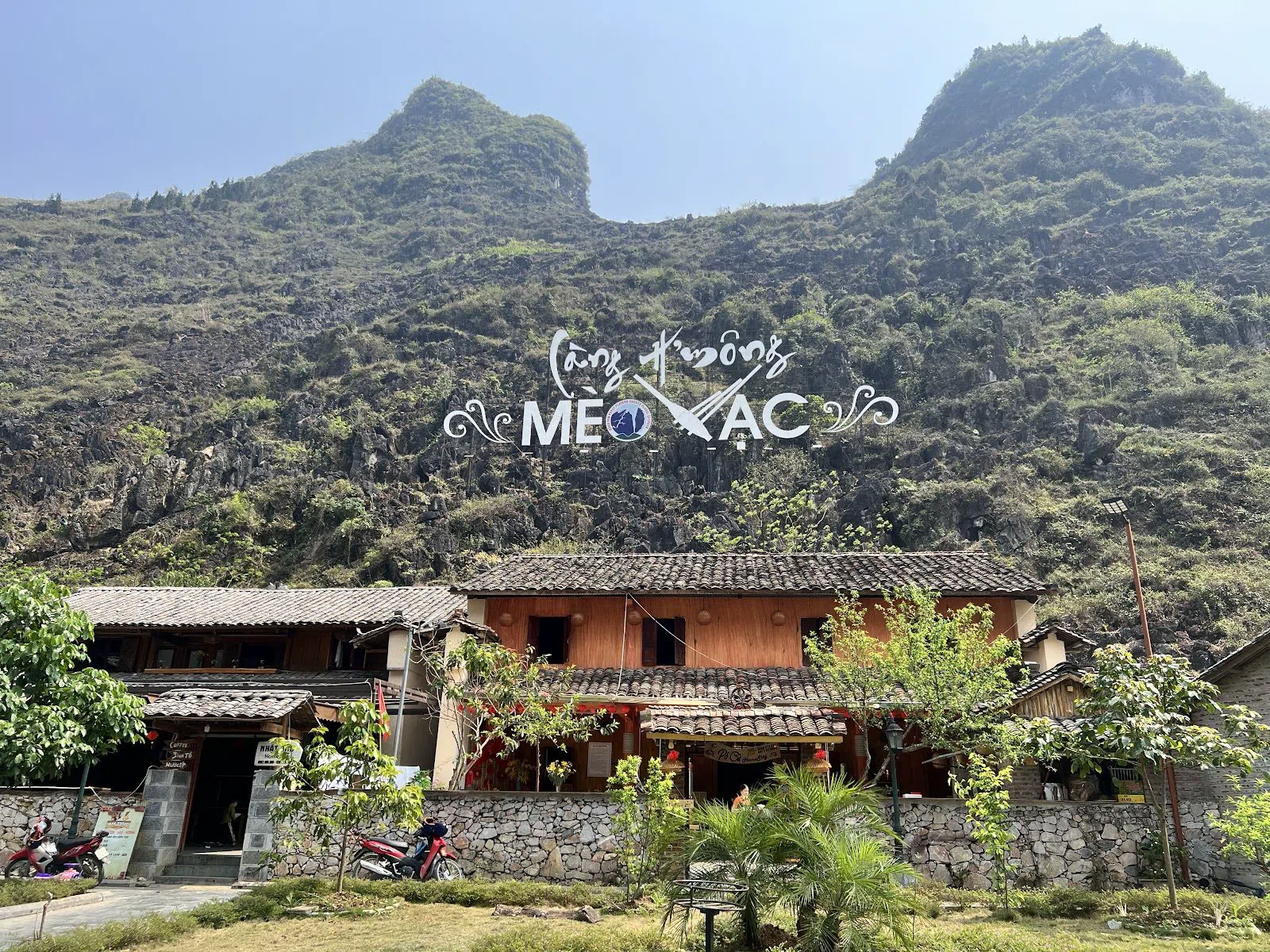
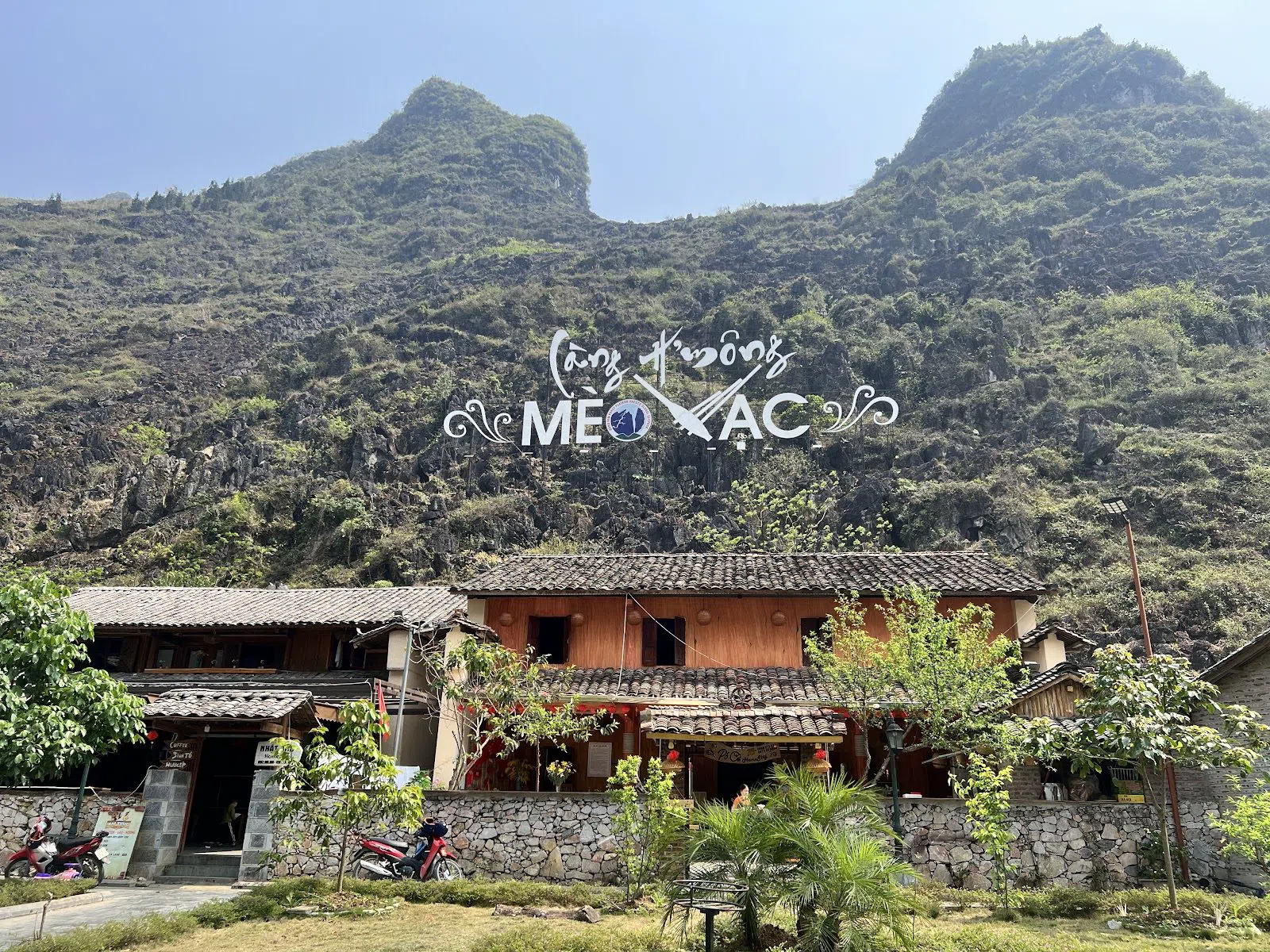
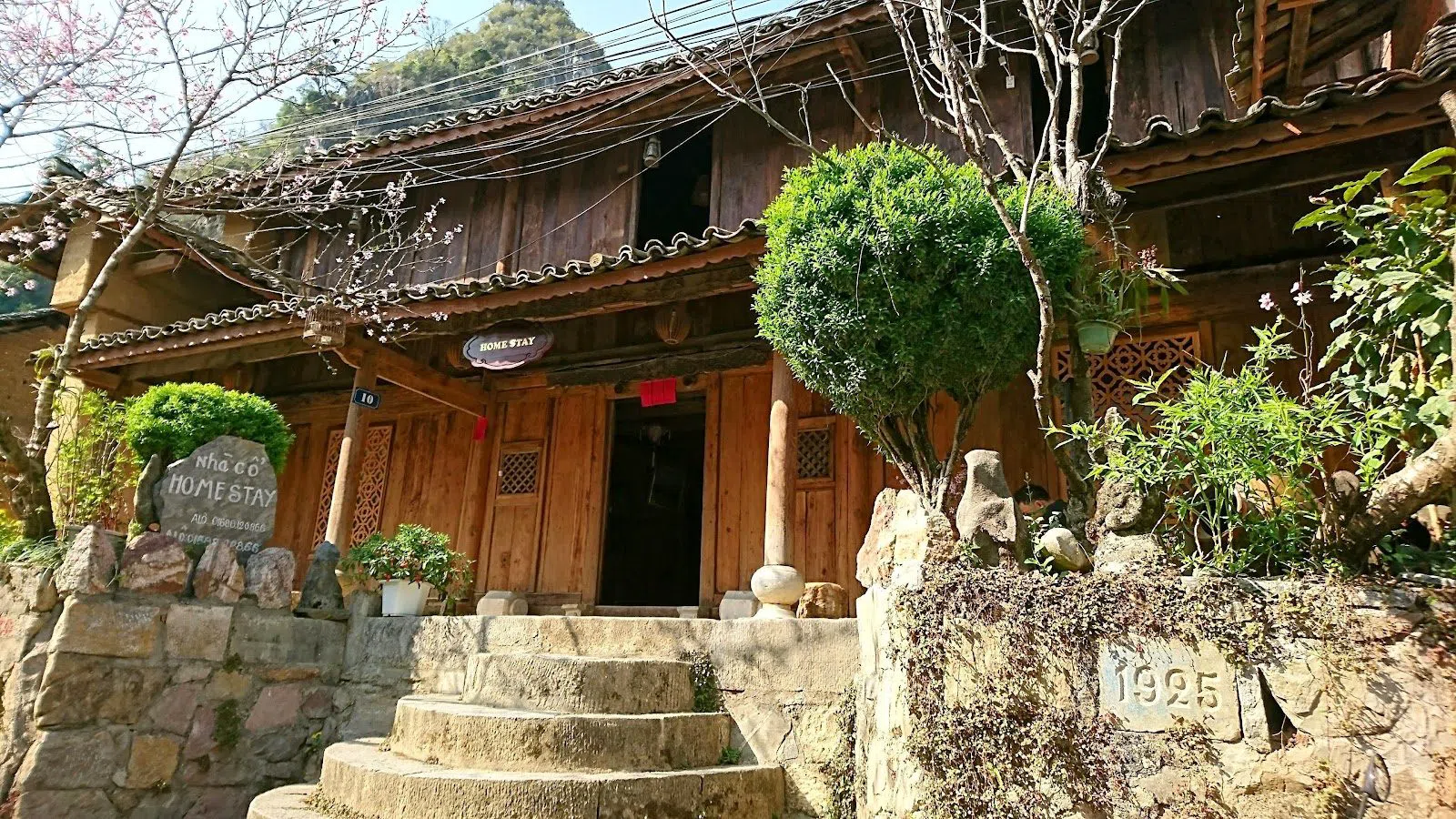
Pả Vi Hmong Cultural Village (Pả Vi Hạ, Mèo Vạc) is the most convenient legitimate base at the Mèo Vạc end of Mã Pì Lèng. Homestays run in 30 households across its three sections, enough to absorb a whole small-group tour. A bed is ₫150,000 to ₫400,000 per person per night. The village is a grid of wooden-framed Hmong houses with two-tier yin-yang tile roofs, ochre rammed-earth walls and dry-stone boundary walls, entered through a buffalo-horn-shaped stone gateway, with the karst wall of the Mã Pì Lèng massif rising directly behind. Vietnam's national tourism administration named it the country's best community tourism destination in September 2025.
Day three through Du Già
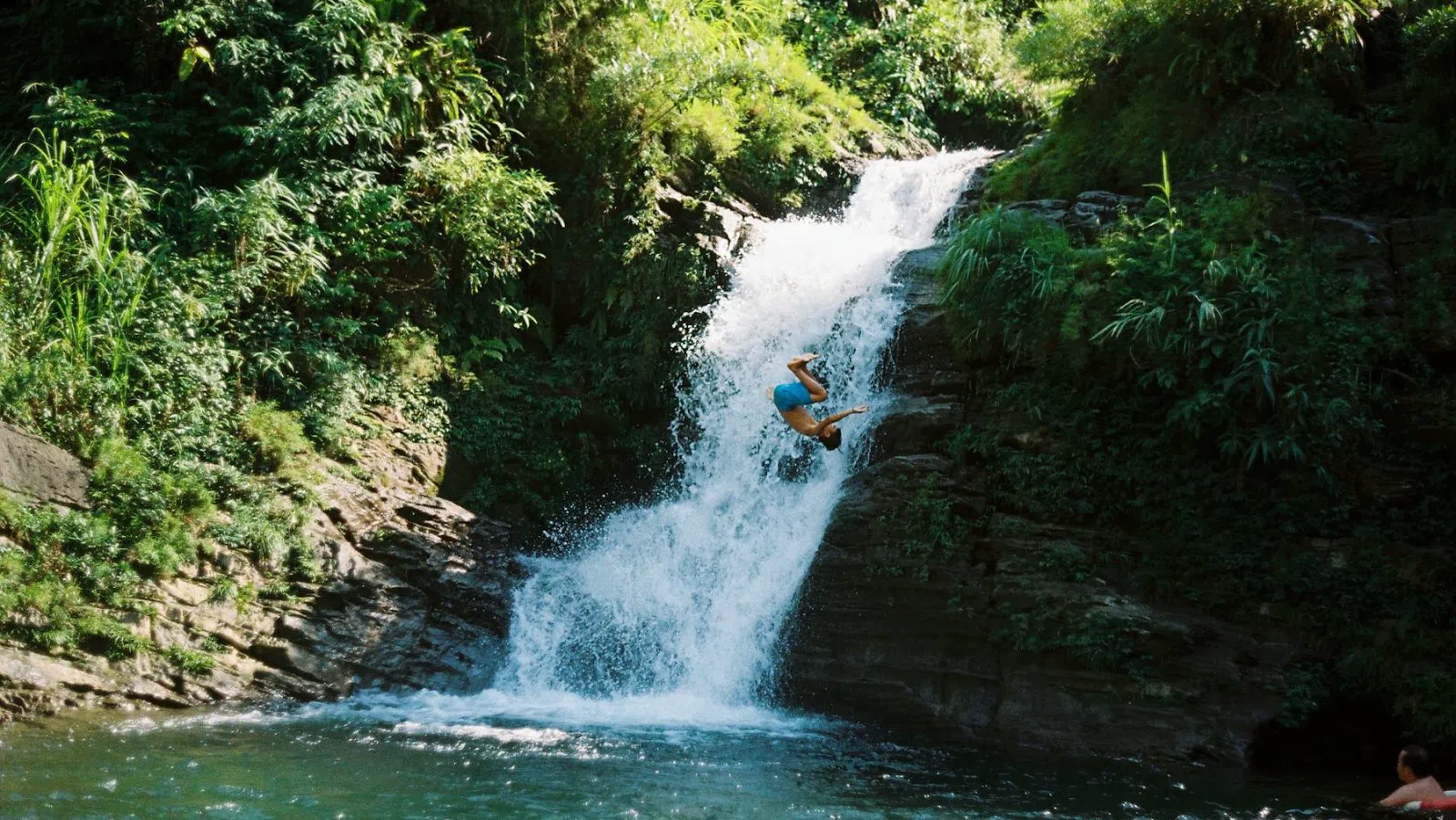
Du Già Waterfall is the swim that earns the third day. White water slides over tiered dark rock into a clear turquoise plunge pool rimmed by boulders, with dense forest closing overhead. Swimming is free, and a villager may collect ₫10,000 to ₫20,000 for parking. Nothing here is staffed or supervised. The path down is rough earth through bamboo, and it goes slick after rain.
Tickets and booking
Tickets on this route are bought where you stand: the booths at Lũng Cú and Lùng Khúy, the quarter gate in Đồng Văn where it is collected, the pier office below Tràng Hương bridge. None of it can be reserved ahead. Guided three-day departures run daily, and seats go steadily, so fix your dates early.
Is three days worth it
It suits a traveller who wants the pass, the canyon and the waterfall in one run and can give three days to mountain road. The route asks for a tolerance of exposure at the laybys and on the flag tower stair, and little else of a passenger.
Best time to go
Take Quản Bạ Heaven's Gate early in the morning, before the valley haze burns off. Climb at Lũng Cú outside the middle of the day, when the stair is fully exposed and punishing in midday sun. Reach the pier away from midday, when the single official dock queues, and well before the end of the afternoon, when boatmen can stop running. Du Già is fullest from June to September and thin outside the wet season. When cloud has eaten the viewpoints, Lùng Khúy Cave is the stop that still works.
Before you ride
The museum is shut on Monday, the market trades at the weekend, and the departure is the one thing to book in advance. See the Hanoi guide and the Hanoi hotel search.
떠나기 전에
Why three days rather than two?
Three days is the shortest version that fits Mã Pì Lèng Pass, the Tu Sản canyon boat from Nho Quế 1 pier and the swim at Du Già Waterfall on the way back south. Guided three-day departures leave every day of the week.
Is the Mã Pì Lèng Skywalk still open?
No. The clifftop outcrop in Mã Pì Lèng village has been fenced off since 1 July 2026 and there is no reopening date. The pass and its official laybys are open as normal, and riding it costs nothing beyond the ₫5,000 to ₫10,000 some laybys charge to park a motorbike.
Where do you board the Tu Sản canyon boat and what does it cost?
In August 2026 only the hydro-company pier below Tràng Hương bridge, Nho Quế 1, is legal; the informal docks, Tà Làng included, have been shut. It runs daily from 07:00 to 18:30 and the trip takes 45 minutes. Tickets are ₫120,000 to ₫150,000 for adults and ₫60,000 for children, with parking ₫10,000 for a bike or ₫20,000 for a car.
Which days is Đồng Văn market on?
The big ethnic market runs on Saturday and Sunday mornings only, so the day you leave Hanoi decides whether you see it. Walking in is free and a bowl of thắng dến is ₫20,000 to ₫50,000. This is working trade, so ask before you photograph faces.
Can you do the loop with limited mobility?
Two stops will be a problem. The 389 steps at Lũng Cú Flag Tower are steep and narrow to single file at the top, and the ₫15,000 electric buggy only covers the ride up from the car park. A long stepped path to Lùng Khúy Cave rules that one out for anyone with poor mobility.