The Hanoi issue
Day Trips That Justify a Longer Stay in Hanoi
Sixteen trips within three and a half hours of the Old Quarter, with 2026 prices, the weather that cancels them and which ones hold up for a group.

By Rui MarquesTwo unhurried days, not nine temples

The delta around Hanoi runs flat for about sixty kilometres and then, quite abruptly, stops being flat. South of the city the limestone comes up out of the paddy in vertical blocks with rivers running underneath it; east, the same rock walks into the sea and becomes islands. Nothing worth going to out there is more than three and a half hours from the Old Quarter, which is the practical case for keeping one room for a week and driving out from it rather than repacking every second night.
How the map actually works
Four corridors leave the city and the rest of this article follows them. South, on the expressway, is the limestone country around Ninh Bình, roughly 95 to 120km, an hour and a half to two hours, and the densest cluster of good half-days anywhere near Hanoi. East is water and pilgrim mountains, two and a half to three and a half hours, and always a full day. West is hills and heritage villages, anything from an hour to three and a half. And there is a near ring, 14 to 60km out, some of it inside Hanoi's own administrative boundary, that you can decide on over breakfast.
Pacing matters more than which trips you choose. Two long days back to back will flatten you, because the driving is the tiring part, not the walking. On four days, take one long trip and one near one. On seven to ten, three long days, two half-days and the rest in the city is about the honest limit before the road stops being interesting. Book the driver, not the tour, wherever you can: a private car with a driver for the day costs less than four seats on a group bus and buys you the departure time, which in this part of the country decides whether you queue.
Plan your Hanoi trip
Live prices from our booking partners.
Free cancellation on many rooms. We may earn a commission when you book.
The limestone south of the city
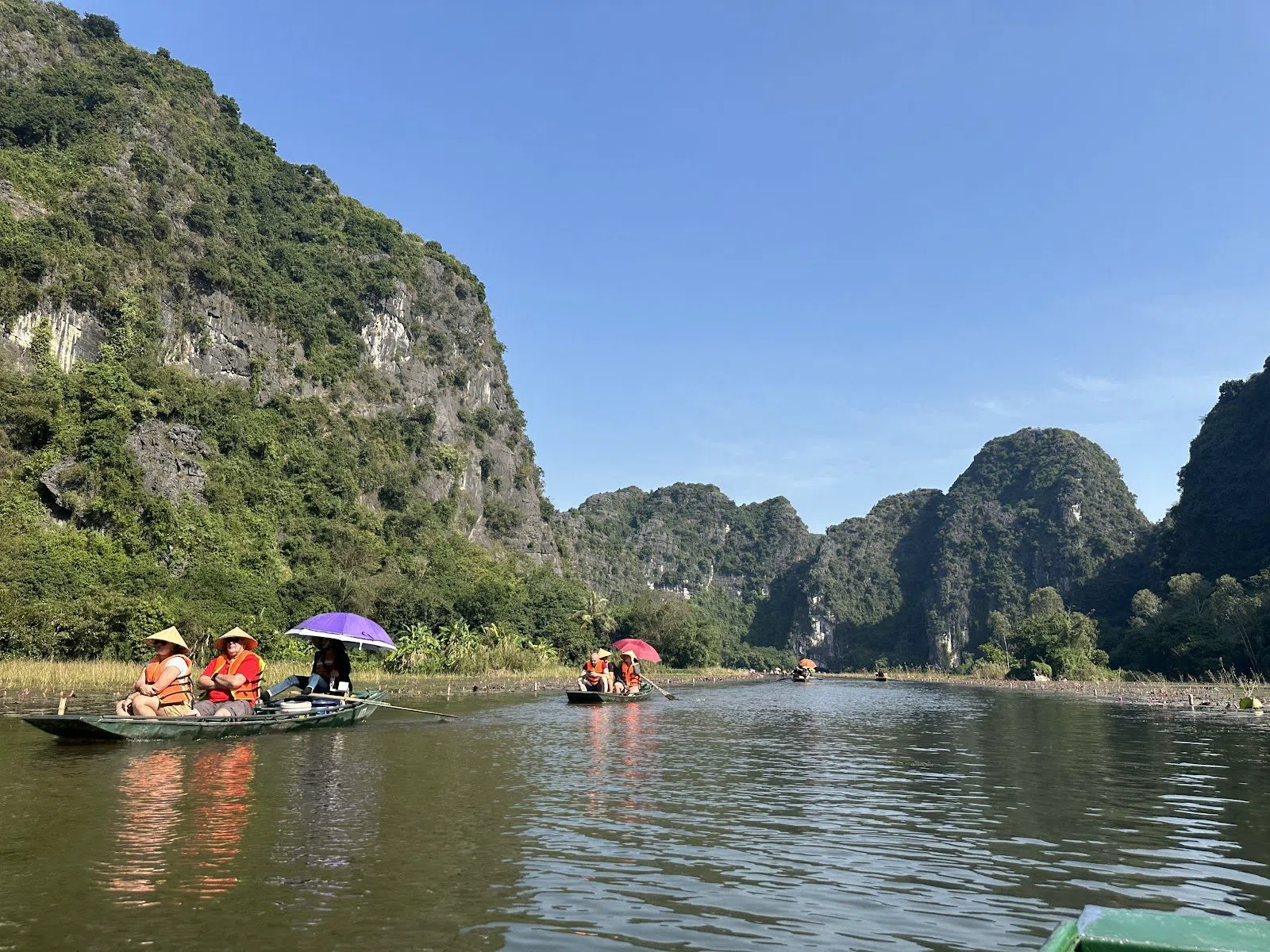
Tràng An Scenic Landscape Complex (Ninh Bình, about 95km south) is the anchor of the whole region and the one trip that would justify the drive on its own. It is a UNESCO mixed site of flooded valleys and cave tunnels rowed in wooden sampans, on three fixed routes of two to three hours each; you cannot go unguided, and you cannot pick your own line through the caves. Entry is 300,000 VND for adults and 150,000 VND for children, a rate adjusted on 1 January 2026, with boat and temple entry included. The wharf runs 07:00 to 17:00 and the last useful departure is well before closing.

Groups are easy here in a way they are not elsewhere in the valley. Boats seat four to five, so a party of ten simply buys several sampans at the same wharf and travels in convoy, close enough to talk between hulls. Two things to plan around: Tràng An genuinely suspends ticket sales in bad weather (all routes stopped during Typhoon Wipha), and it caps daily entry on peak Tết days. Neither is negotiable at the counter.
Hang Múa (the same valley, minutes from the Tràng An wharves) is the viewpoint climb that produces the photograph most people have already seen of this landscape: a stone staircase up a limestone knuckle, with the river bending through rice below. It costs 100,000 VND for adults, children go free, and parking is 10,000 VND. The gate is open 06:00 to 19:00, and the climb itself is only twenty to thirty minutes. Start early. The steps are single-file, so a group spreads out and reassembles at the top anyway, and by mid-morning you are queuing on stone in full sun.
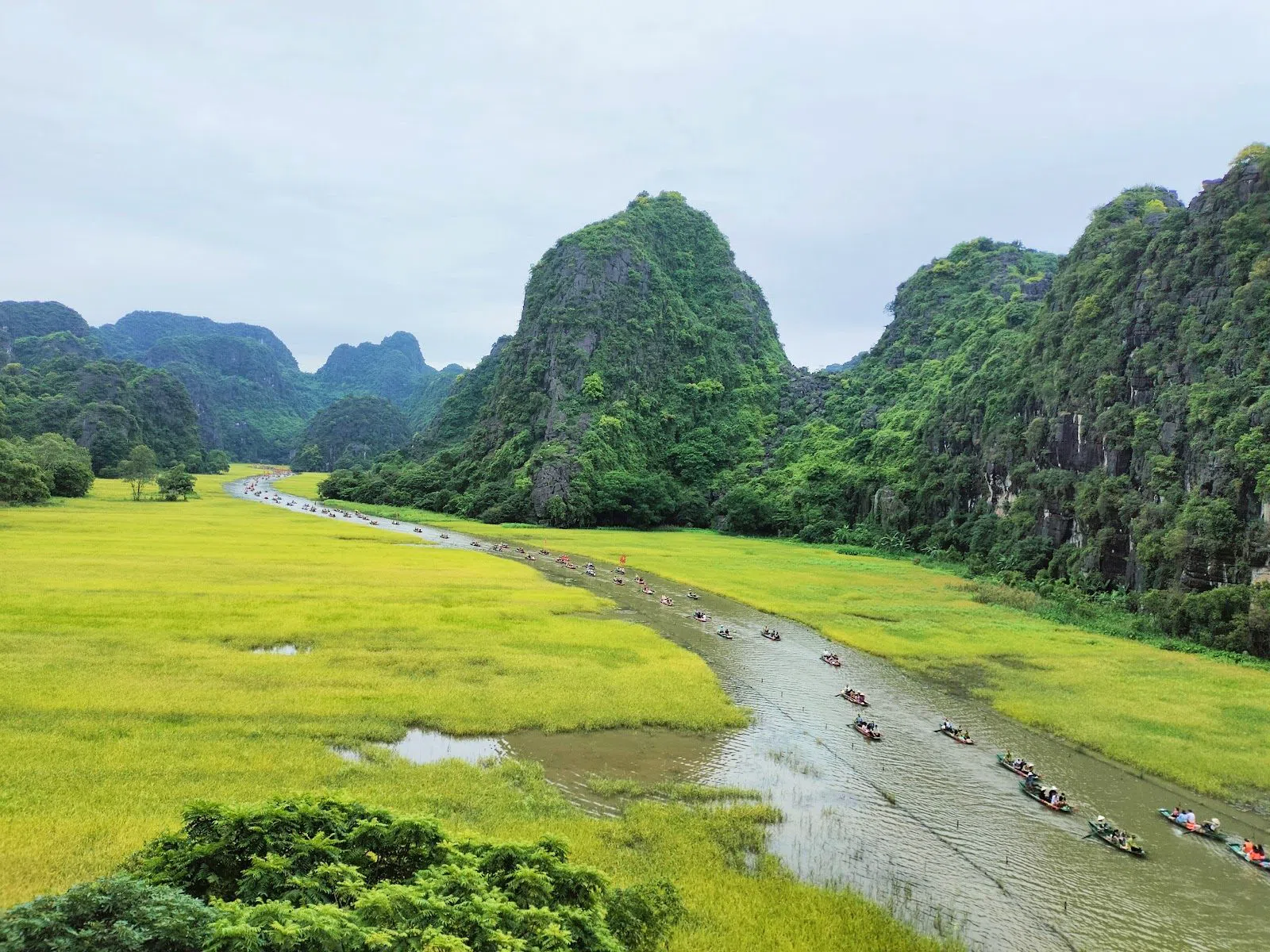
Tam Cốc – Bích Động (a few kilometres from Hang Múa) is often described as the same thing as Tràng An and is not. The route is shorter at about ninety minutes, it crosses farmland rather than cave systems, and the rowers here work the oars with their feet, which is local to this stretch of river and not a performance for visitors. Tickets are 250,000 VND adult and 120,000 VND child, or a 340,000 VND combination that adds transport up to Bích Động pagoda. Buy at the Đình Các wharf counter, which opens at 07:30; hotels will sell you the same seat with roughly fifteen per cent added. Two passengers per boat is the norm, so a group splits across several.
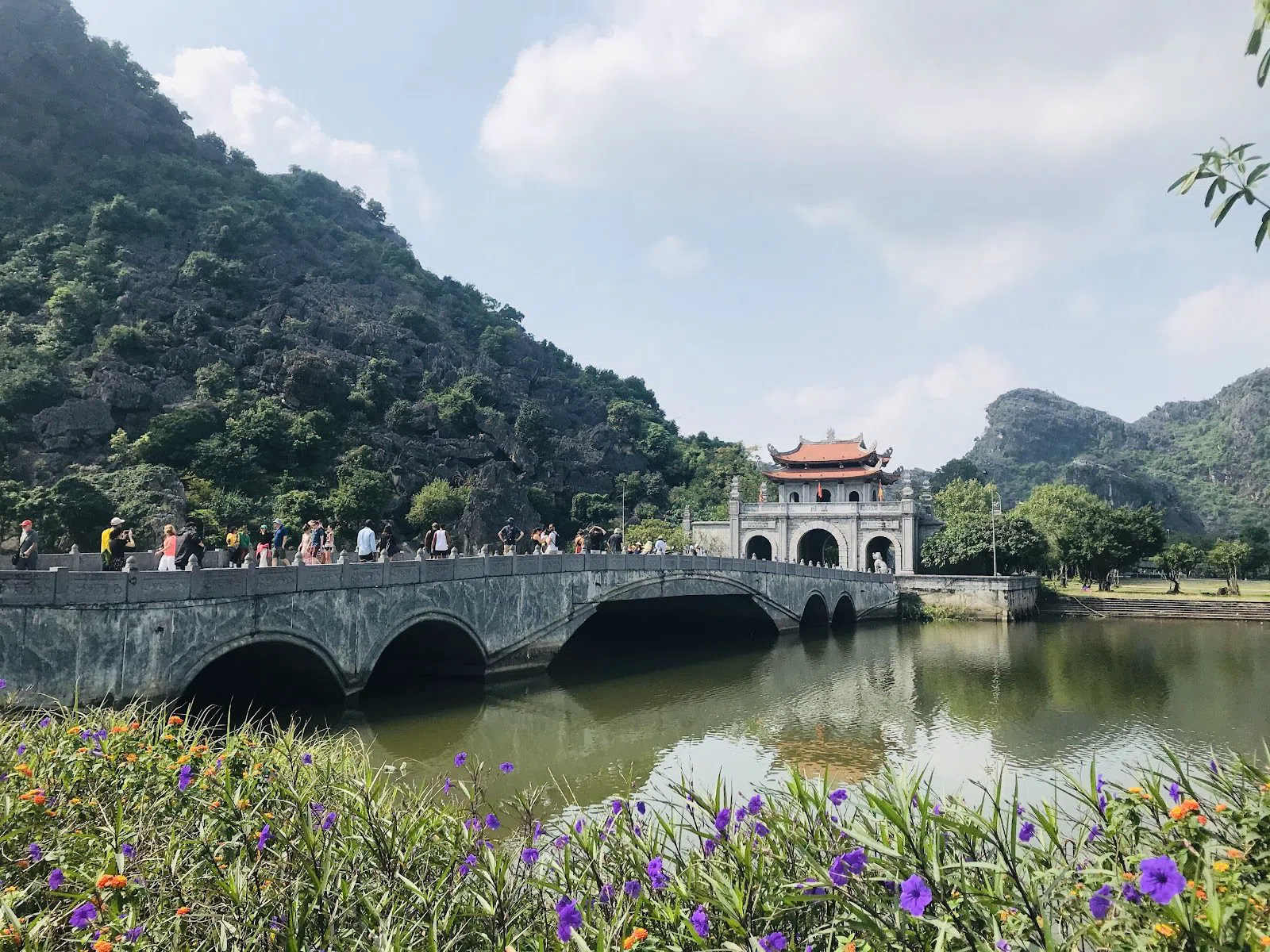
Hoa Lư Ancient Capital (inland from the Tam Cốc wharves) is the historical spine that makes the boats mean something. This was Vietnam's first capital in the tenth century, and what stands now are courtyard temple halls to Đinh Tiên Hoàng and Lê Đại Hành in a bowl of the same limestone. Entry is 20,000 VND per adult, cash Vietnamese đồng only; cards are not accepted anywhere on the site. The dress code at both halls is enforced: shoulders and knees covered. It is the most group-friendly stop in the region, with open courtyards, coach parking and nothing to book.
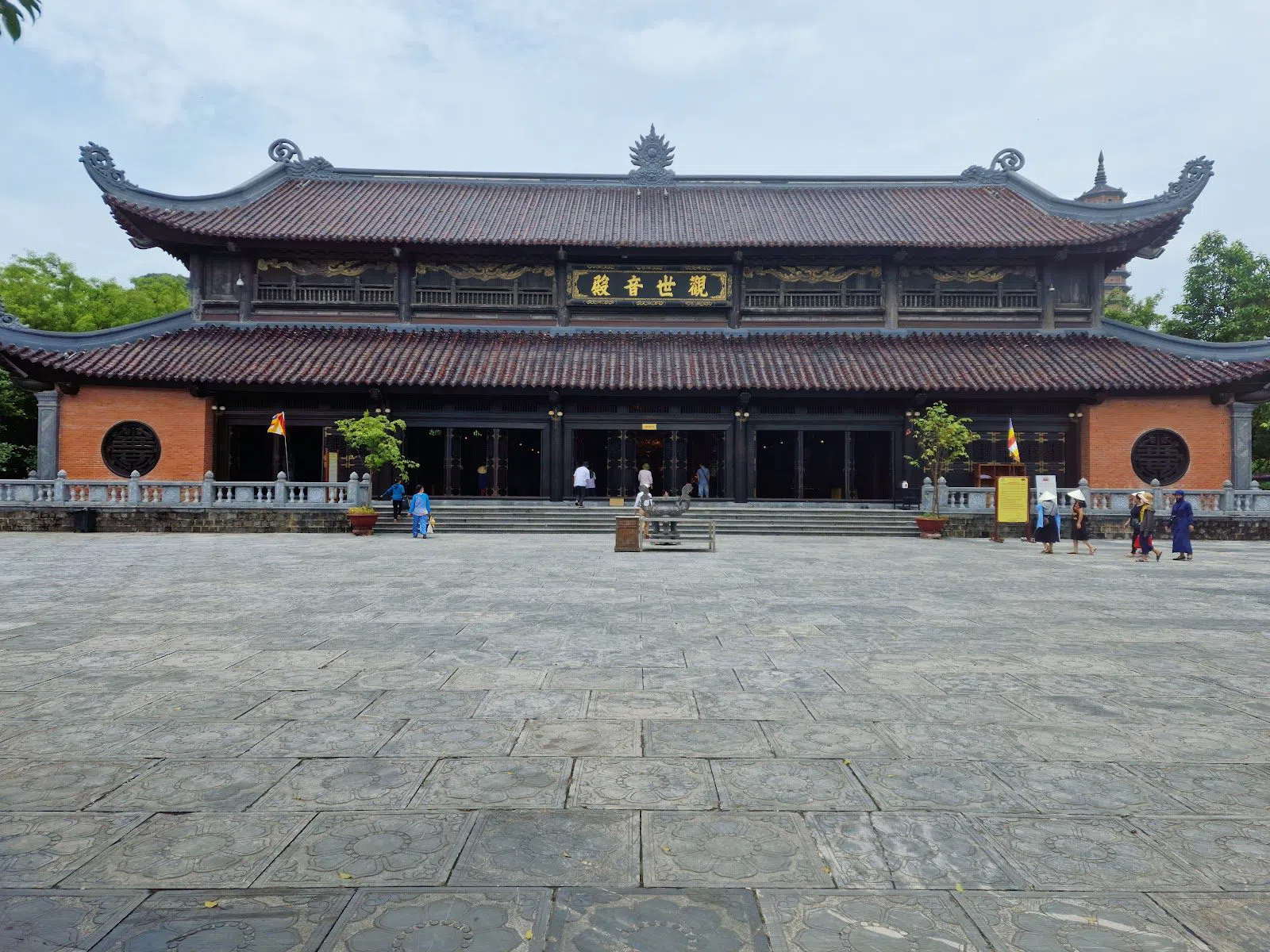
Bái Đính Pagoda (west of Hoa Lư) is the outlier here. It is the largest pagoda complex in Southeast Asia and takes seven to nine million visitors a year, with electric buggies running the 3.5km from the gate for roughly 60,000 to 100,000 VND return; the grounds themselves are free and a guide costs extra. It is also modern construction, not antiquity, and anyone expecting a thousand-year-old temple will be disappointed by lunchtime. Go for the arhat corridor, five hundred stone figures down a covered walkway, and for the fact that it absorbs a coach party better than anywhere else in the valley.
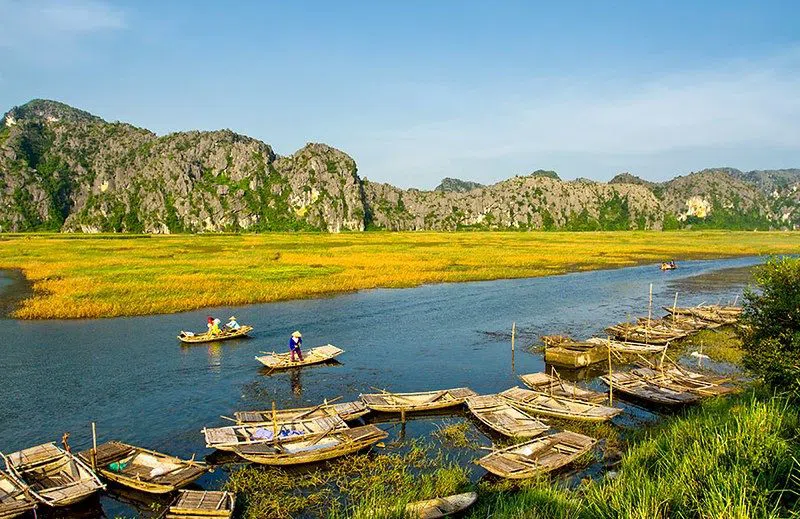
Vân Long Nature Reserve (north of the main Ninh Bình cluster) is the counterweight to all of that. It is the largest wetland reserve in the Red River Delta, it holds Vietnam's biggest population of Delacour's langur, and it was used as a filming location for Kong: Skull Island. Entry is 20,000 VND plus 60,000 VND per two-person boat. That boat capacity is the catch: a party of ten becomes five sampans strung out across still water, which is fiddly to coordinate and rather the point of the place. It is never crowded. Couples and photographers will prefer it to Tràng An; a large group probably won't.
A forest older than any of the temples
Cúc Phương National Park and the Endangered Primate Rescue Centre (about 120km south, beyond the Ninh Bình cluster) is the most substantial thing on this list and the one that rewards an early start most. It is Vietnam's first national park, and the rescue centre inside it holds around 180 primates of fifteen species, run in partnership with Zoo Leipzig. Park entry is 60,000 VND for adults and 20,000 VND for students. The rescue centre is a separate ticket and cannot be visited unguided: access is by one-hour tours in English or Vietnamese only, so a group needs to book its slot in advance rather than turn up and hope. Give the day to this one alone; it does not combine well with boats.
Where the karst meets the sea
Hạ Long Bay (east, via the expressway, around two and a half hours) is doable as a day, which surprises people who assume it demands an overnight. Day boats leave Tuần Châu marina seating twenty to forty with a seafood lunch, and private charters are available for a group that would rather set its own route. Reckon on roughly $40 to $120 per person, plus the 310,000 VND bay entrance fee, which since 1 February 2026 is charged separately from the boat ticket on most bookings. Check whether your quote includes it.

Weather here is not a formality. After the Wonder Sea capsizing in July 2025, which killed 39 people, departures are automatically suspended above Force 6 winds. If your sailing is cancelled the morning you arrive, that is the system working as intended, not an operator letting you down. Build a fallback into the day rather than arguing at the ticket window.
Cát Bà Island and Lan Hạ Bay (east via Hải Phòng, three to three and a half hours each way) is the same UNESCO archipelago approached from the other side, and considerably less trafficked. Packaged day trips from the Old Quarter run roughly $50 to $90 per person including transfers, lunch, kayaking and cycling, with the cable car crossing included on some. The transit is long enough that this only makes sense for people who would genuinely rather paddle a kayak between limestone walls than sit on a large boat with a buffet. If that is you, it is the better of the two.
Two mountains people climb for religious reasons
Yên Tử (east, past the Hạ Long turn-off) is the birthplace of the Trúc Lâm school of Vietnamese Zen, and in 2025 it was inscribed on the UNESCO World Heritage List as part of the Yên Tử–Vĩnh Nghiêm–Côn Sơn, Kiếp Bạc complex, the newest listing within day-trip range of the city. Site entry is modest; the cable car runs roughly 300,000 to 350,000 VND return and saves the better part of a day's climbing. Budget the full day regardless. Cable cars run continuously and the pilgrim paths are wide, so groups move through it without friction.
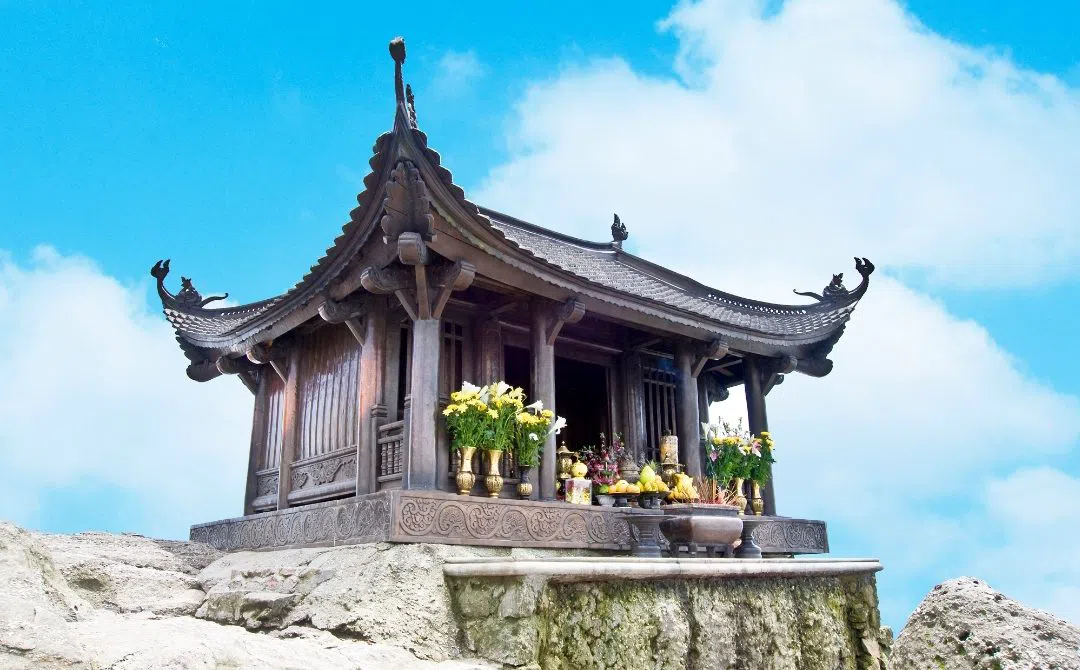
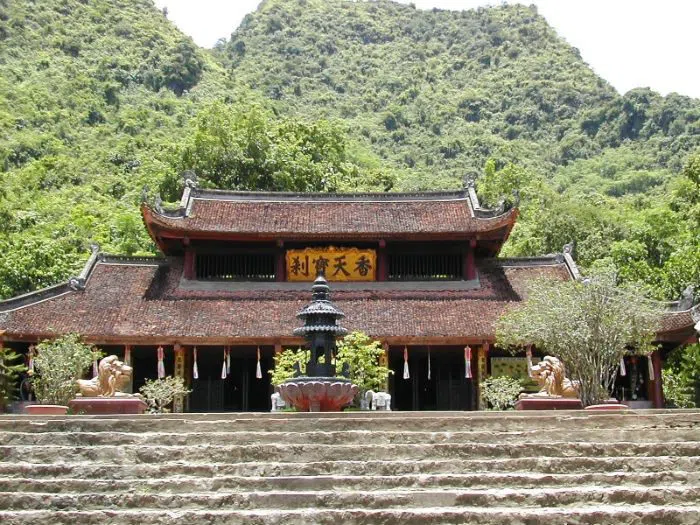
Perfume Pagoda (Chùa Hương) (southwest, inside Hanoi's own boundaries) is a river approach through flooded fields followed by a cave temple in the hillside, and the structure of the day (boat, then climb or cable car) is a large part of its appeal. The combined entry and boat ticket is 230,000 VND, and the cable car adds 260,000 VND return for adults and 180,000 VND for children. There are six fixed ticket points, a machine at the Thiên Trù car park and online sales, so it is straightforward for a group of any size. Avoid January to April unless you actively want to be inside a national pilgrimage; during the festival months the crush on the boats and the steps is the dominant experience.
Half-days you can decide on over breakfast
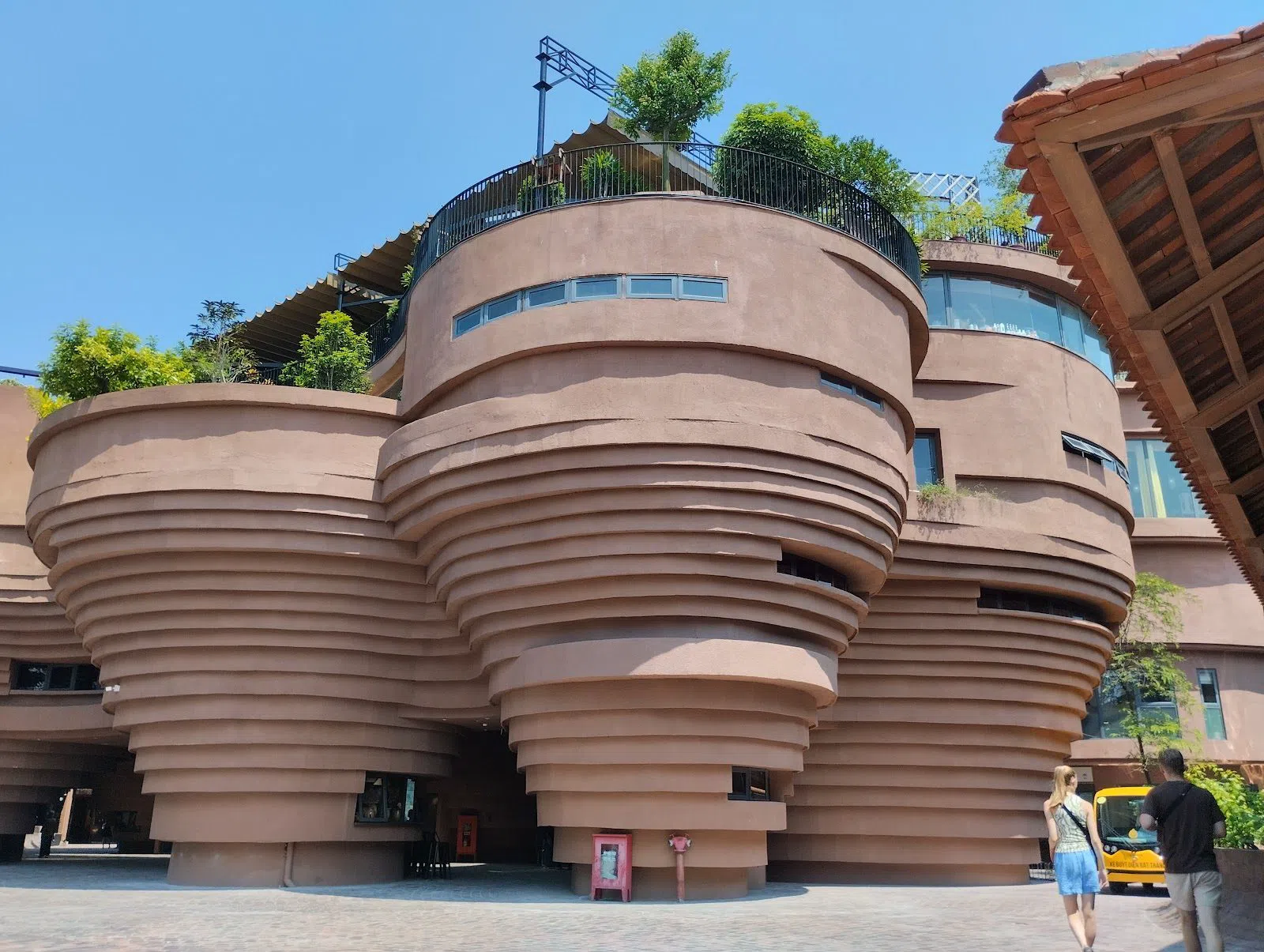
Bát Tràng Pottery Village (14km southeast, across the river) is the shortest trip here and the only one that needs no planning at all: public bus 47 from Long Biên gets you there, the village is free to walk, and a wheel-throwing workshop costs 50,000 to 100,000 VND. Studios take walk-ins and will take a booking for a larger party. The ceramic art museum lifts it above a souvenir stop, because this is a working craft village with several centuries behind it, not a display of one.
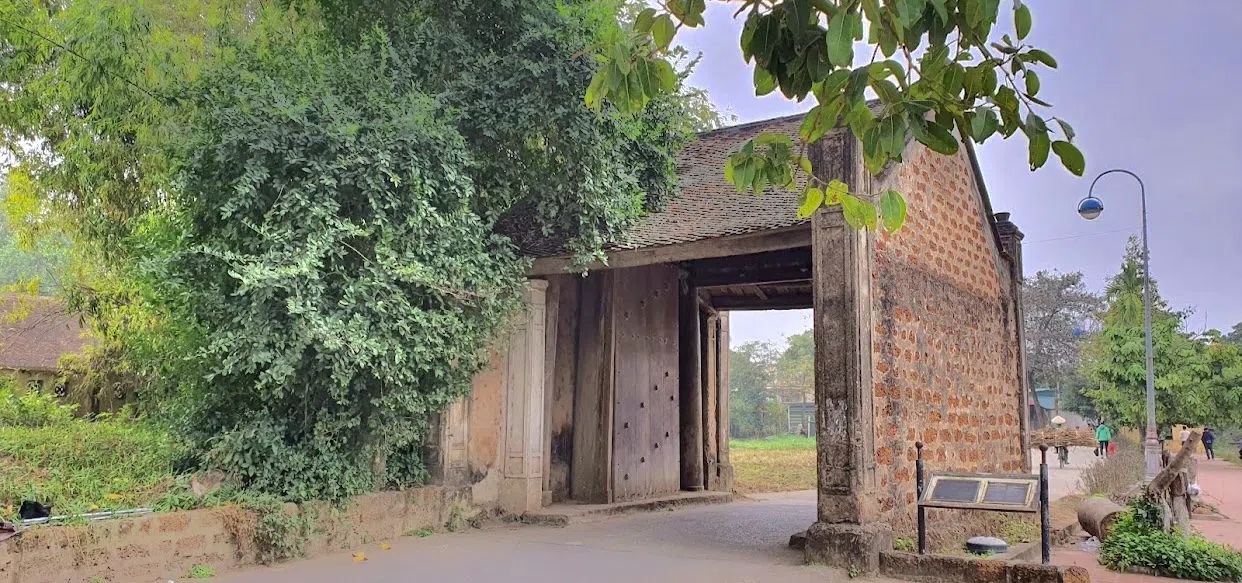
Đường Lâm Ancient Village (about 50km west) is Vietnam's best-preserved laterite village: rust-coloured block walls, communal houses, lanes narrow enough that cars stop at the edge. Entry is 20,000 VND adult and 10,000 VND child, and village tours that include lunch in a family house are a standard product and cost considerably more. It is the right correction for anyone who has had their fill of boats and karst, and it is welcoming to groups precisely because those family lunches are set up for them.
Cooler air, and a gamble on fog
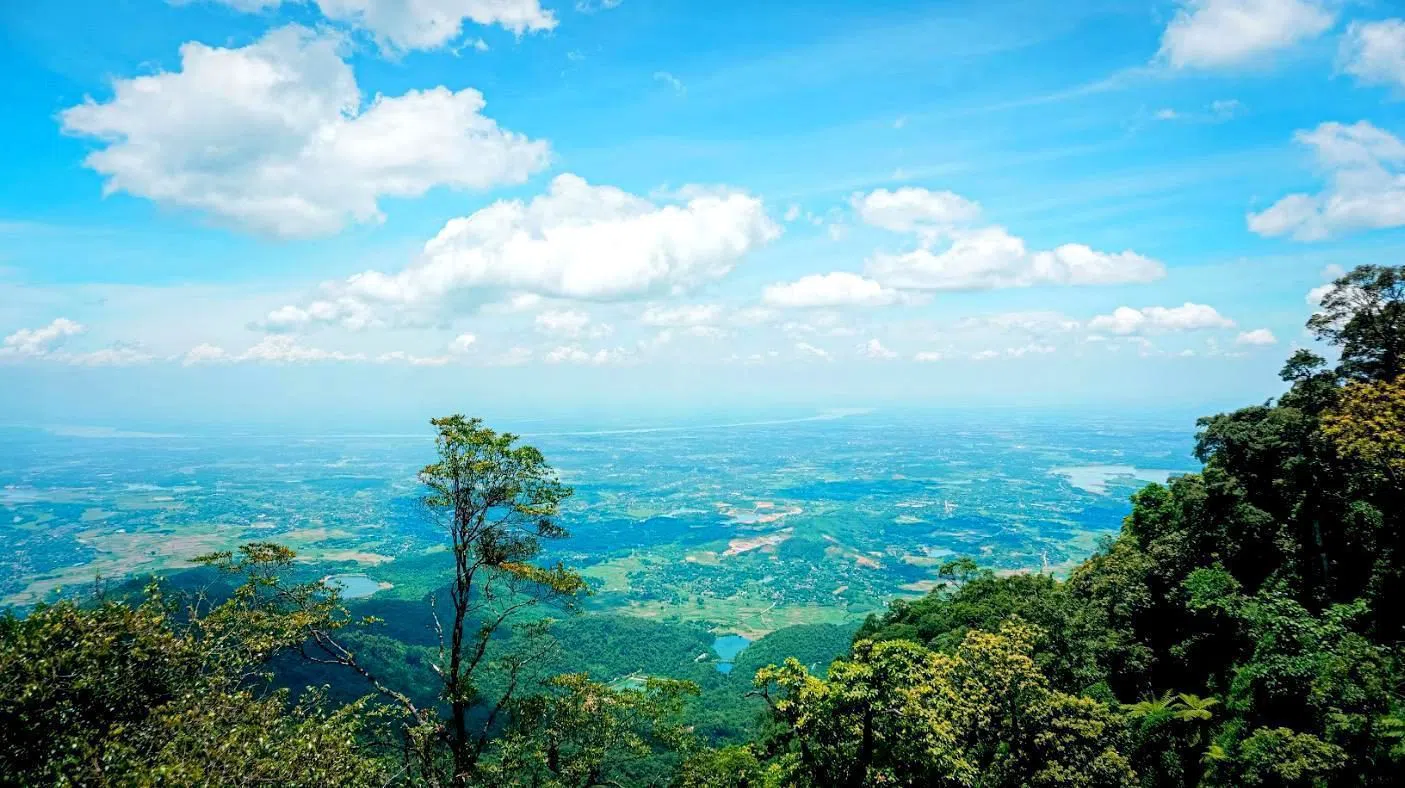
Ba Vì National Park (an hour west) is the most atmospheric short escape near the city: a road that climbs high up the mountain, short walks from the car parks to a French-era ruin and a hilltop shrine. Entry is 60,000 VND and you must keep the ticket, because it is checked again at each attraction. The old church is easy to drive past, marked only by a small sign on the left as you ascend.
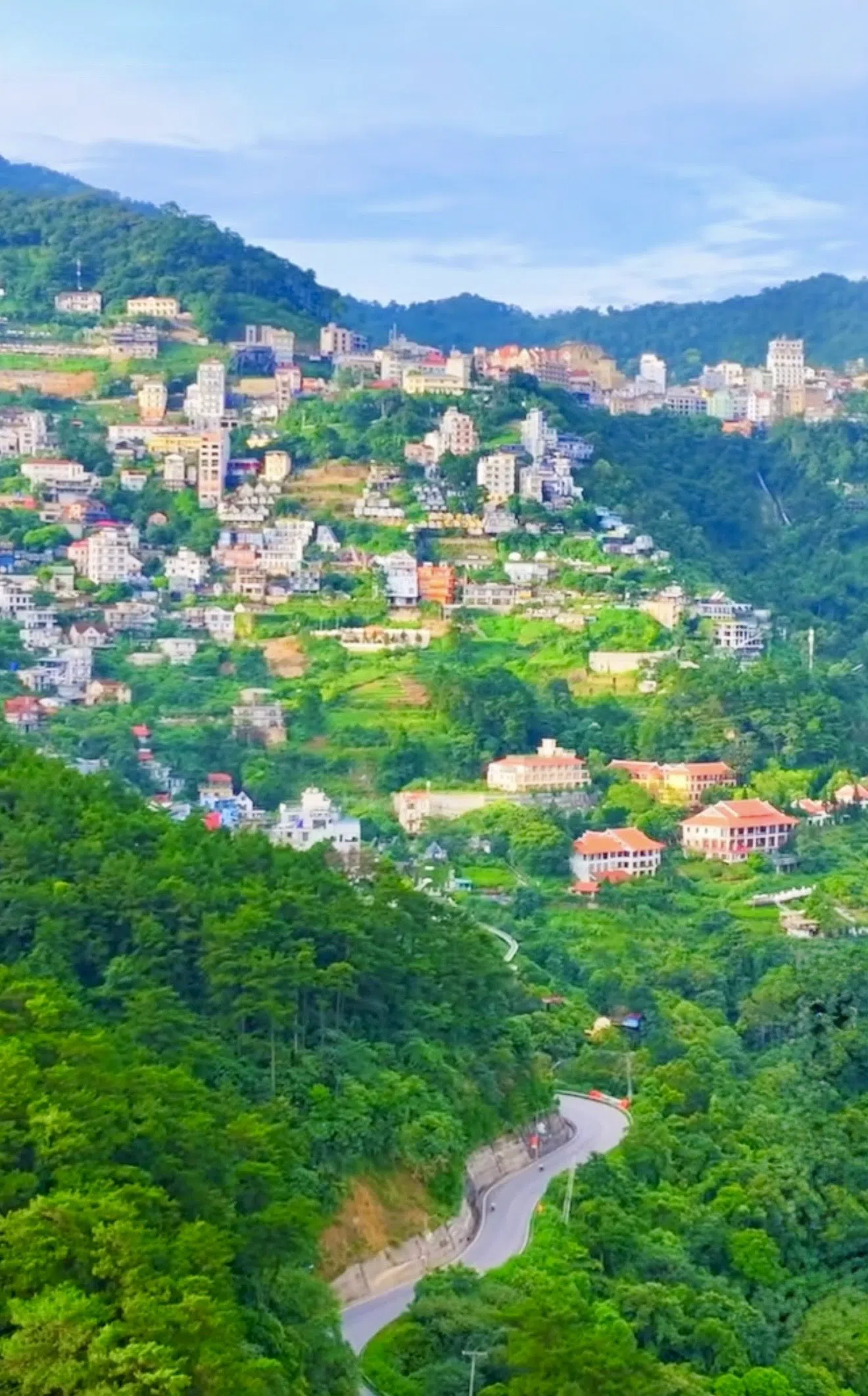
Tam Đảo (north-west, a hill station town) sits above 900m and runs five to ten degrees cooler than the delta, which makes it the obvious move in summer heat. The town is free to visit and the cost is entirely transport; a private car for a group is the practical option. The fog that makes the stone church photogenic is the same fog that erases the valley views, and you cannot know which you will get until you are up there. It is a whole town, so seating a group for lunch is never a problem.
Mai Châu (150km west, three to four hours each way) is the furthest thing that still functions as a day trip, and only just. A packaged day tour runs roughly $40 to $60 per person with transport and lunch, and the Lác and Pom Coọng villages are organised for visitors, with homestays, communal meals and evening song-and-dance. One night in a stilt house is the better version of this, and the day tour is a compromise you make because you have already committed to a city room.
Which of these suit whom
Groups of six or more should build around Hoa Lư, Bái Đính, Yên Tử, Đường Lâm and the Hạ Long day boats, all of which are designed for volume. Tràng An works too, in convoy. Vân Long and Tam Cốc fragment a group across small boats, which some parties enjoy and others find annoying by the third transfer. Couples and anyone travelling alone get the better of Vân Long, Cúc Phương and Ba Vì, where low numbers are the entire proposition.
Because every one of these returns to the same bed, where you base yourself decides how early you can leave. The Old Quarter is closest to the tour pick-up points and the night trains; the streets south of the lake are quieter and better for a 06:00 departure. Compare rooms on the Hanoi hotel search, and if you are still shaping the in-city half of the week, the Hanoi guide covers what fills the days between the drives.
The practical part
For anything south or west, a private car with driver for the day is the sane default for two or more people. You set the departure, you skip the hotel's schedule, and the cost lands close to per-seat bus prices once you are three up. Bát Tràng is the exception; bus 47 from Long Biên does it for pocket change. The eastern trips to the bays are worth booking as packages, because the boat, the lunch and the transfer are genuinely easier bundled.
Carry Vietnamese đồng in small notes. Hoa Lư takes cash only, and the buggy at Bái Đính, the parking at Hang Múa and most wharf counters are the same in practice. Buy boat tickets at the wharf rather than through a hotel desk, which typically adds around fifteen per cent.
Leave at 06:00 for anything involving a climb or a queue, and treat 07:30, when the Tam Cốc counter opens, as the earliest anything is actually sold. Skip Chùa Hương from January to April. Expect boat operations to stop outright in a storm, in Ninh Bình and on the bay alike, and keep one flexible day in a week so a cancellation is an inconvenience rather than a loss.
On cost, a full Ninh Bình day with two boat trips and a temple runs about 600,000 to 700,000 VND per person in tickets before transport. A bay day is the expensive one at $40 to $120 plus the 310,000 VND entrance fee. The near ring (Bát Tràng, Đường Lâm, Ba Vì) comes in under 100,000 VND in entry each, which is what keeps a longer stay here from getting expensive.
Before you go
How many days should I stay in Hanoi if I want to do day trips?
Four days lets you take one long trip and one short one without rushing. Seven to ten days is enough to work from a single base: three long days out, two half-days on the near ring, and the rest in the city. Past that you spend more time in the car than at the places you drove to.
Can I see the Ninh Binh limestone in one day from Hanoi?
Yes, but you have to choose. A realistic day is Tràng An plus Hang Múa, or Tam Cốc plus Hoa Lư, not all four. Tràng An alone takes two to three hours on the water, and the drive is an hour and a half to two hours each way. Add Bái Đính on top and the day runs to a coach timetable.
Is Ha Long Bay or Cat Ba better as a day trip?
Ha Long is shorter at around two and a half hours each way. Day boats from Tuan Chau marina seat 20 to 40 and include a seafood lunch, from roughly $40 to $120, plus the 310,000 VND bay entrance fee. Cat Ba and Lan Ha Bay take three to three and a half hours each way but are far less trafficked, and kayaking and cycling are included for about $50 to $90. Choose Cat Ba if you would rather paddle than sit on a large boat.
What happens if bad weather cancels my boat trip?
It happens often, and by design. Tràng An suspends ticket sales in storms, and all routes stopped during Typhoon Wipha; bay departures are automatically suspended above Force 6 winds after the July 2025 Wonder Sea capsizing. Keep one flexible day in the week so a cancellation costs you a swap and not the trip.
Do I need to book any of these in advance?
Most take walk-ins. The exception is the Endangered Primate Rescue Centre at Cuc Phuong, which can only be visited on guided one-hour tours in English or Vietnamese, so a group must reserve a slot. Everything else (boats, buggies, cable cars, pottery workshops) is sold on the day at the gate, and buying at the wharf rather than through a hotel saves roughly fifteen per cent.