The Hanoi issue
Landing in Hanoi With the First Day Still Intact
How to get in from the airport, what to do with the dead hours before check-in, and a first-evening route through the Old Quarter that has you oriented by nine instead of asleep.

By Rui MarquesTwo unhurried days, not nine temples

The flight in sets you down north of the Red River, and the twenty-odd kilometres between the arrivals hall and the Old Quarter are where most first days get lost. Hotels here rarely release a room before 14:00, the traffic does not care that you have been awake for twenty hours, and the standard response (dump the bags in a lobby and start walking) usually ends in a nap that runs until nine at night and a body clock that stays broken for three more days. A lighter first day, put in the right order, works better than a heavier one.
Clearing the airport without a negotiation

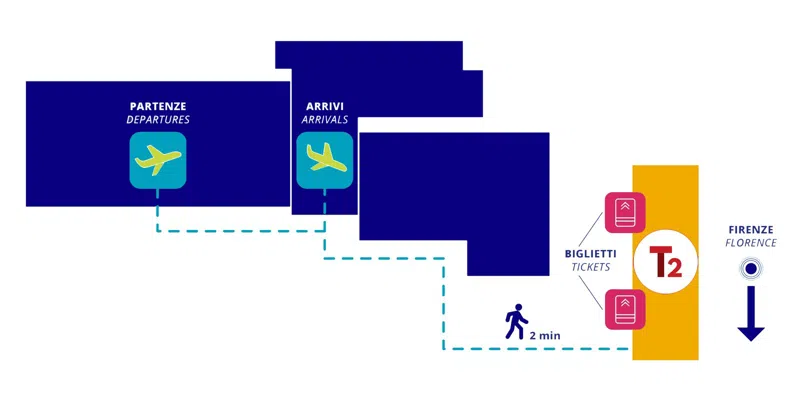
Settle the transfer before you fly, because the arrivals hall is the worst place to make a decision. Grab (Vietnam's ride-hailing app, and the default run from the airport into Hoan Kiem) wants a card added to the account while you still have reliable wifi at home; doing it on airport data with a queue behind you is how people end up in an unmetered car. The fare runs roughly 280,000 to 420,000 VND (~US$12 to 18) to Hoan Kiem, with a 15,000 to 25,000 VND airport surcharge shown upfront rather than sprung at the kerb. The pickup point at T2 sits past Pillar 14, further along the terminal frontage than instinct suggests, so look for the pillar numbers rather than the first cluster of drivers. For a group with luggage, the GrabCar 7-seater is the honest choice; larger parties book two cars side by side and split the fare in-app. The app also holds a record of the agreed fare, which matters more than the price, because it ends the meter argument before it starts.
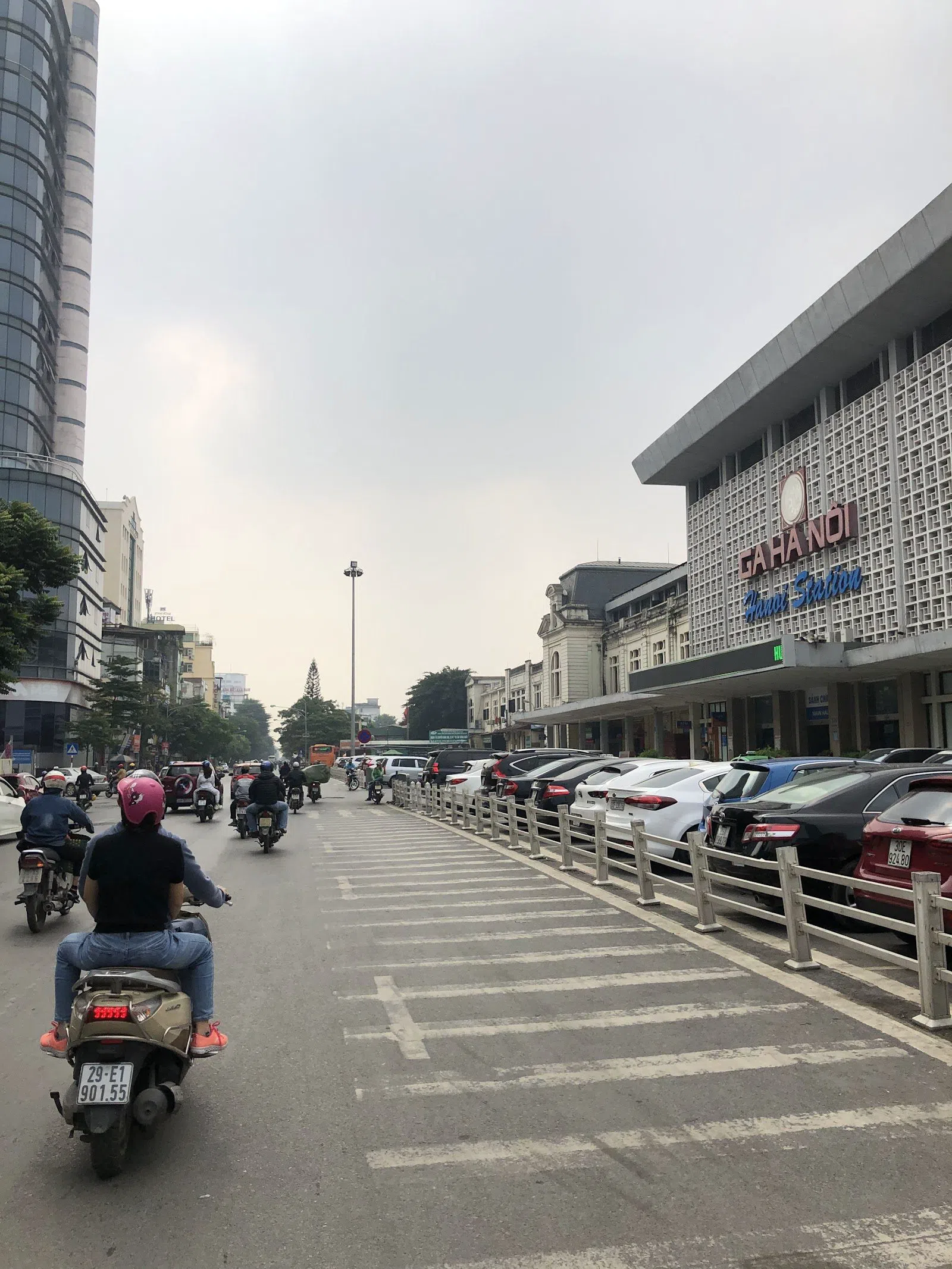
The alternative is Bus 86, the Hanoi Airport Express, which needs no booking at all. You walk on, any size of group, and pay 45,000 VND (~US$1.85) flat in cash to the conductor once you are moving. It takes fifty minutes to Hanoi Railway Station and costs less than a coffee at the airport. Two things matter on arrival day. The luggage racks fill fast, so a late boarder with two large cases stands in the aisle for the whole run, and departures stop at 22:15. Anything landing after that is a car, not a bus, whatever the plan said.
If you have not booked a room yet, book it before you land and book it inside the Old Quarter or on the lake. The Hanoi hotel search is the place to fix that, and a central room means the entire first day happens on foot rather than in traffic you have not learned to read yet.
Plan your Hanoi trip
Live prices from our booking partners.
Free cancellation on many rooms. We may earn a commission when you book.
The hours before the room is ready
Every hotel in the quarter will take your bags at eight in the morning and hand you a ticket. That is the easy part. The hard part is what to do with the four or five hours that follow, when you are too tired to absorb a museum and too wired to sit still.
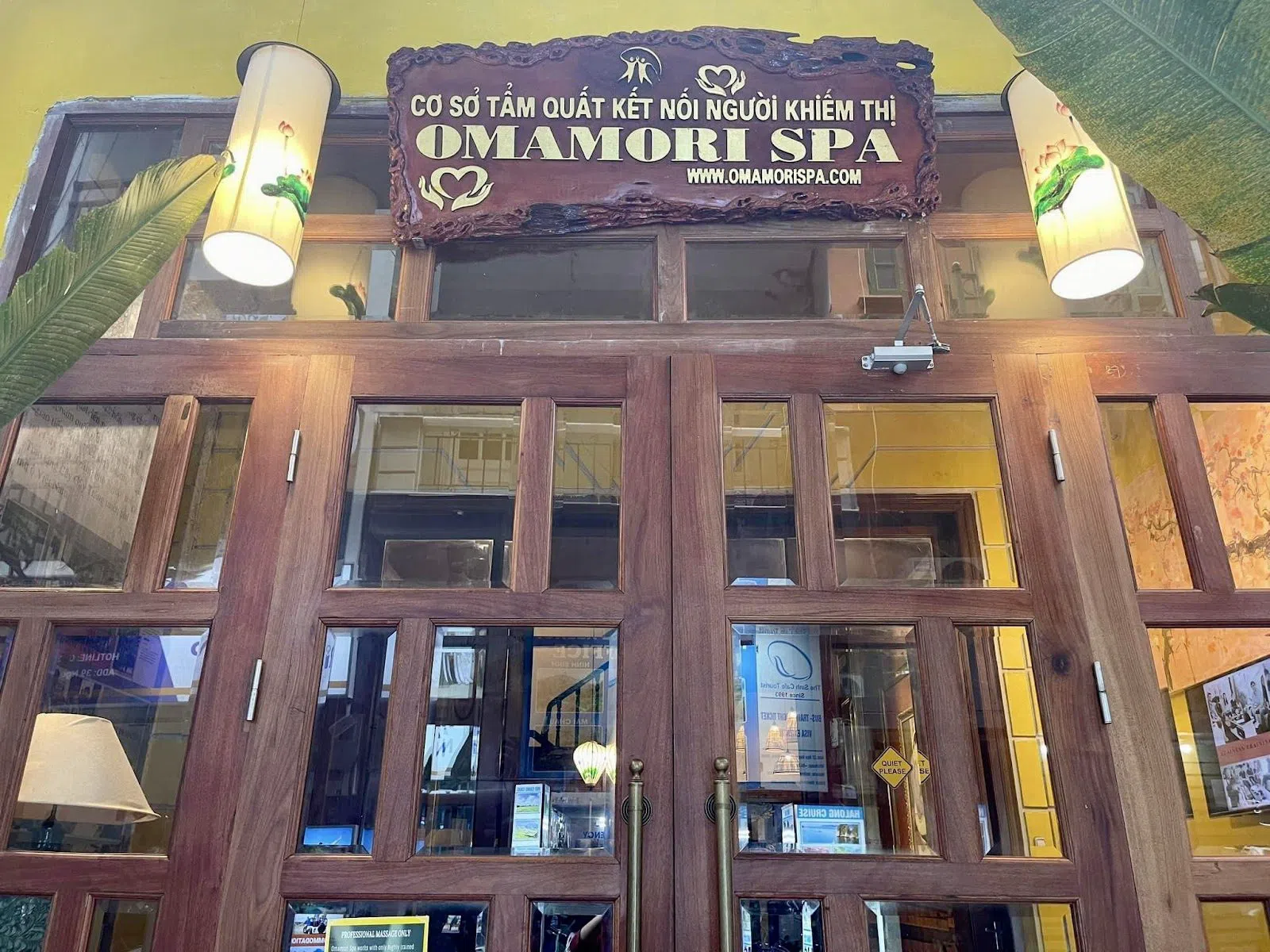
The most useful hour goes to Omamori Spa (Ngo Huyen, a short lane in Hoan Kiem), run since 2013 by the BlindLink social enterprise with visually impaired therapists. Prices start at 300,000 VND (~US$12) for sixty minutes, they are fixed and posted, and a strict no-tipping policy removes the low-grade arithmetic that follows most massages. There are several rooms plus private rooms at a supplement, and for three or more people a phone call or email ahead is the normal way to book; walking in as a group of six and expecting adjacent rooms is optimistic. An hour of pressure work on legs that have been folded into a seat all night does more for the rest of the day than another coffee will.
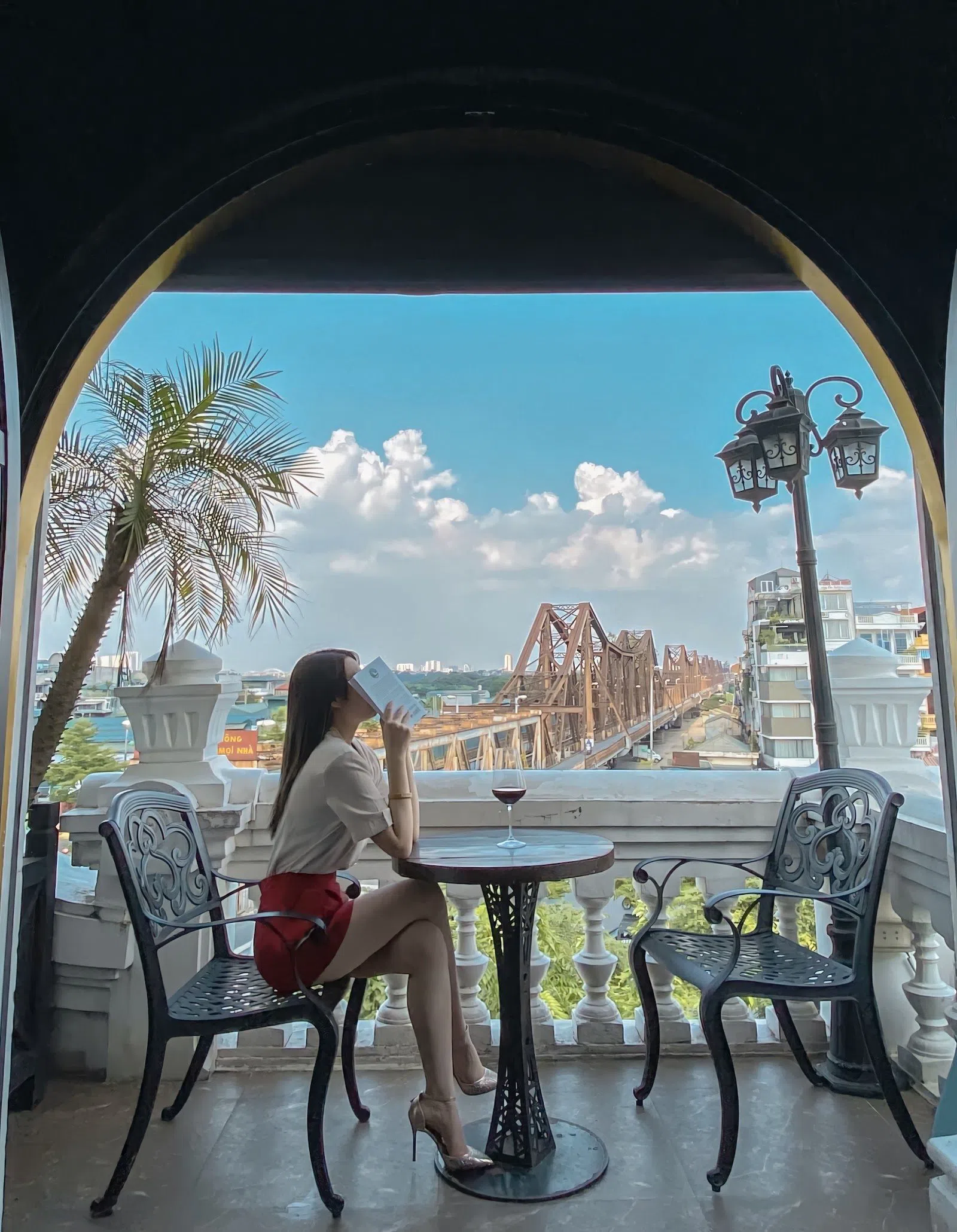
When you need to sit somewhere with a view and no obligations, Serein Cafe & Lounge (Old Quarter) has terraces on several levels and opens 08:00 to 22:30, with drinks from 85,000 VND (~US$3.40). It takes groups comfortably, though the rooftop tables at sunset are worth a call ahead. It is the least effortful vantage point in the quarter: you stay still, and a hundred-year-old bridge, with the trains that still cross it, supplies all the movement.
Eating on a body clock that has not landed yet
Jet lag will wake you at five, and Hanoi is one of the few cities that treats that as normal rather than a problem. Phở Gia Truyền Bát Đàn (Bat Dan, Old Quarter) opens at 06:00 and closes at 10:00 before reopening in the evening, which fits an unadjusted body exactly. It carries a Michelin Bib Gourmand and runs cafeteria-style: you queue, you pay, you carry your own bowl to whatever seat exists. A bowl is 60,000 to 90,000 VND (~US$2.50 to 3.60). Understand the format before you arrive with a party. Twos and threes work, six people will be seated in whatever gaps the room has, and nobody is going to rearrange the tables for you.
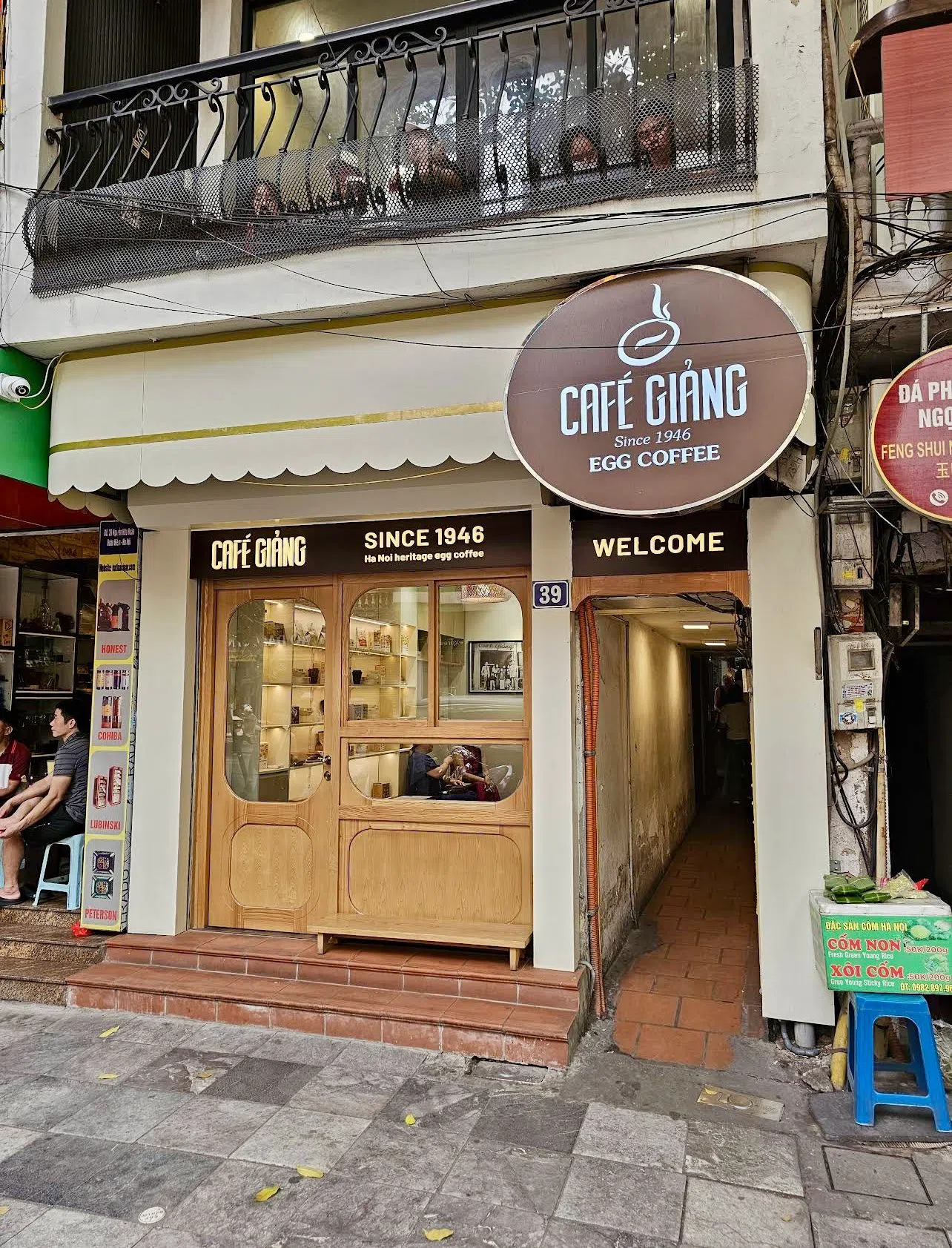
Coffee here is a separate institution. Cà phê Giảng (Old Quarter) is the 1946 original of Hanoi's egg coffee, yolk whipped with condensed milk and poured hot over the coffee, closer to a dessert than a drink, and it is still run by the founder's son. It opens 07:00 to 22:00, takes no reservations, and costs about 35,000 VND (~US$1.40) a cup. The back room and the upstairs absorb small groups; four or more should expect to be split across tables, which in a place this narrow is simply how it works. Every other egg coffee in the city is a copy of this one, which is worth knowing before you pay triple for it on a rooftop somewhere.
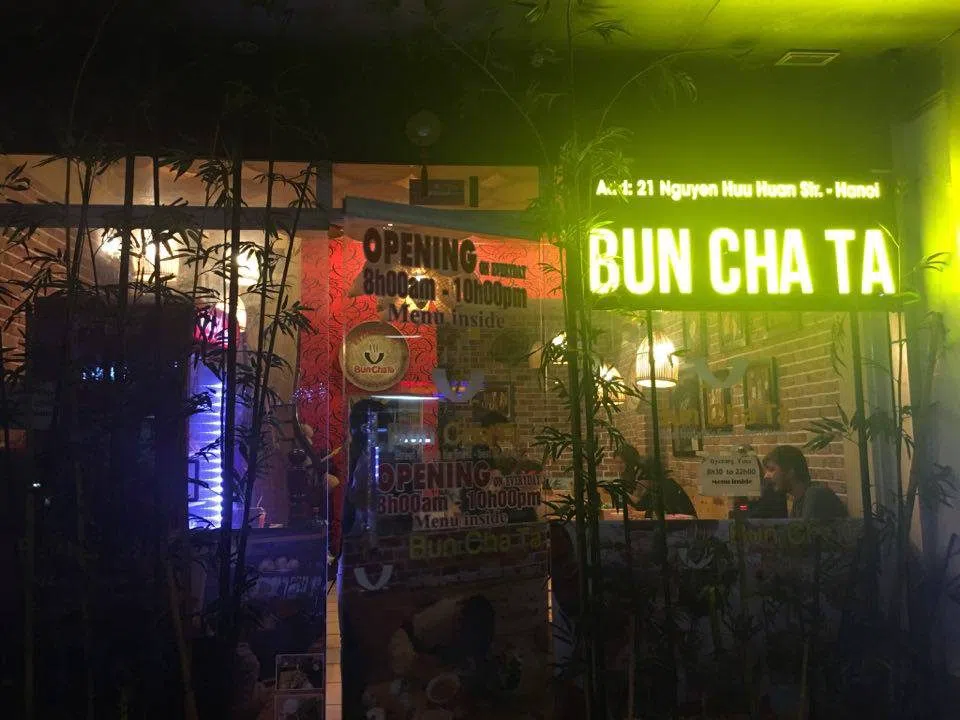
For the first proper sit-down meal, Bún Chả Ta (21 Nguyen Huu Huan, Old Quarter) is the pragmatic call: grilled pork and noodles, proper tables over two floors, an English menu and, unusually for bun cha, it takes bookings. That combination makes it the easiest version of the dish in the quarter for a group of six. It runs 08:00 to 22:00, so it catches you whenever hunger actually lands rather than when a schedule says it should, and it has held a Bib Gourmand three years running. Budget 100,000 to 150,000 VND (~US$4 to 6) a head.
One walk that fixes the map in your head
Before you attempt anything with a ticket, walk the lake. Hoan Kiem Lake and Ngoc Son Temple (Hoan Kiem) sit at the hinge between the Old Quarter's tangle and the wider colonial grid to the south, and doing the loop once tells you more about how the city is organised than any map will. The lakeside path is free and open all hours. The temple, reached by the red bridge, is ticketed at 50,000 VND (~US$2) per person, free for under-16s, with a modest dress code: shoulders and knees covered, worth remembering if you have dressed for the flight rather than the humidity.
Timing changes the character of this walk completely. From 19:00 on Friday until midnight on Sunday, the sixteen streets around the lake close to traffic entirely, and the space that spends the week as a roundabout becomes a promenade full of families, badminton and street performers. A Friday arrival gets that for free; a Tuesday arrival gets motorbikes and should stick to the lakeside path.
If you want the city explained rather than merely seen, Hanoikids (student-run walking guides, meeting wherever you agree) has been matching visitors with university students since 2006. It is free: you cover your own and your guide's entry fees, food and transport, which is the whole cost and is not much. Two conditions come with it. Guides are matched per booking, so parties are kept small and a large group will be split across several guides, and requests want about a fortnight's notice, so you arrange this before departure rather than from the arrivals hall. For a first day it is the fastest route to having someone competent explain the traffic, the notes in your wallet and what is actually on the menu. The districts beyond the quarter, the day trips and the seasons are laid out in the Hanoi guide.
Sights that ask little of a tired brain
A few attractions suit an arrival day: fixed length, no reading, air that moves. Thang Long Water Puppet Theatre (Hoan Kiem, fifty metres from the lake) is the clearest example, fifty minutes of an art form that grew out of flooded rice paddies, performed over a water stage, with no language barrier to negotiate. Tickets run 100,000 to 200,000 VND (~US$4 to 8) depending on seat. There are seven shows daily, eight on Sundays, and group blocks or a private charter can be arranged, but weekend performances sell out, so book a day or two ahead rather than turning up.

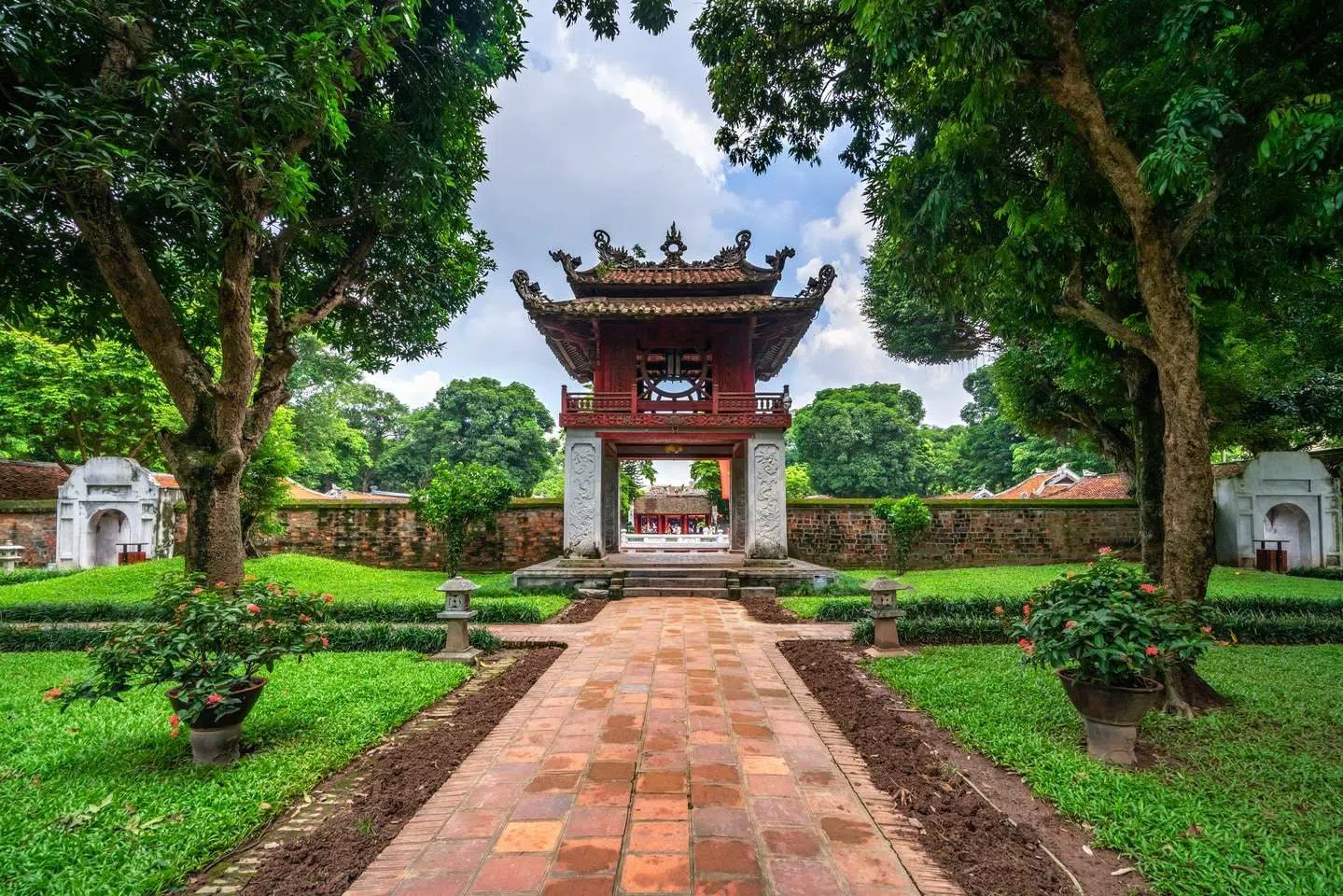
Temple of Literature (Van Mieu, a short ride west of the lake) is the calmest large site in Hanoi: Vietnam's first university, founded in the eleventh century, arranged as a sequence of courtyards that gets quieter the deeper you go. Entry is 70,000 VND (~US$2.80), open 08:00 to 17:00 daily, and the scale absorbs coach groups without feeling crowded. Guides wait at the gate. On Wednesdays, Saturdays and Sundays there is a 3D light-and-shadow night programme from 18:30 to 22:30 at 199,000 VND, which is a better use of an evening than it sounds and asks nothing of you beyond turning up.
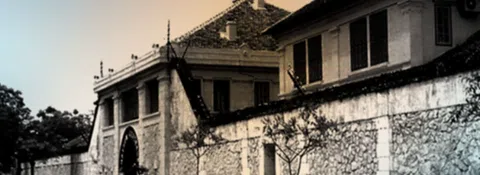
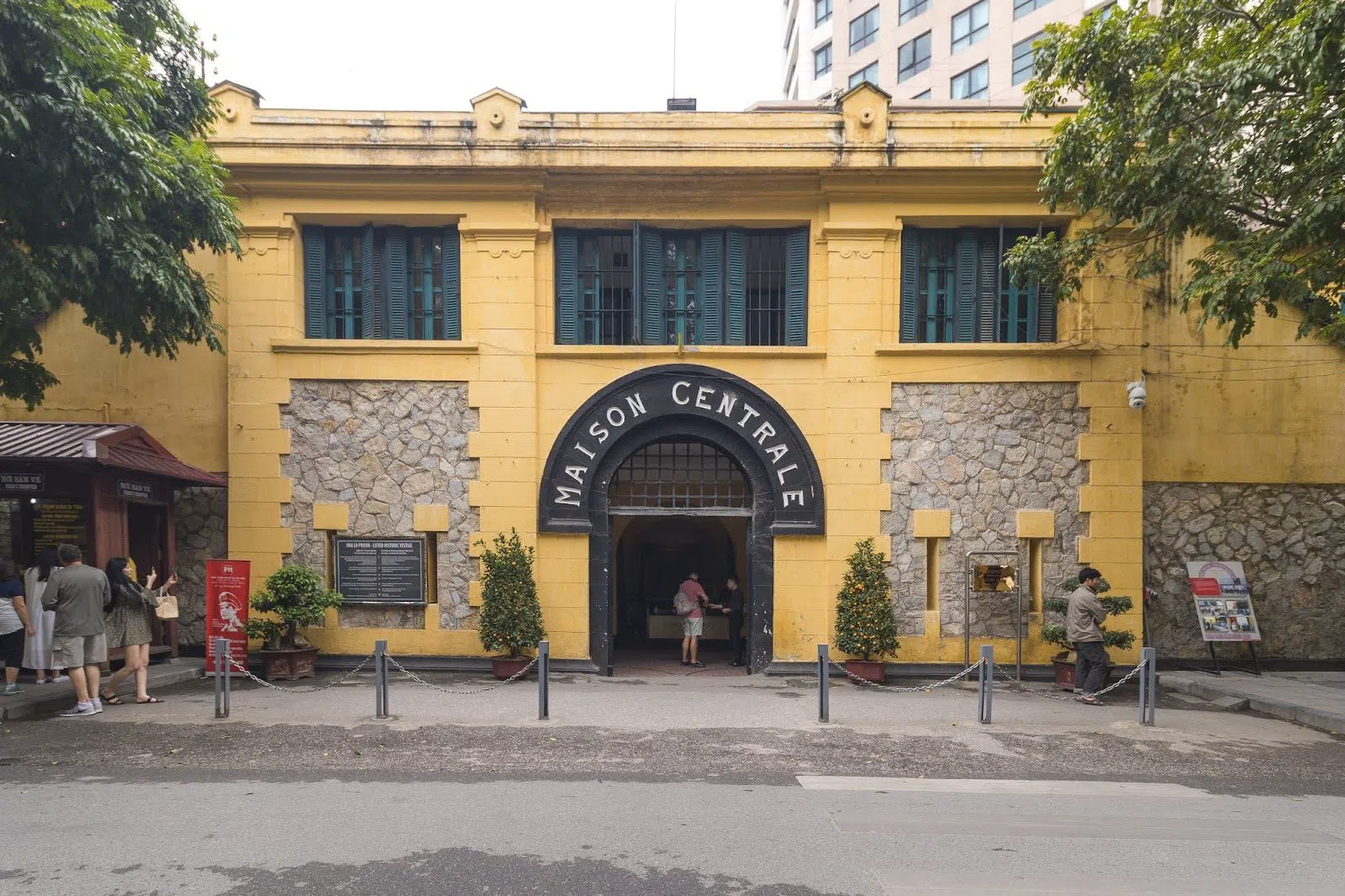
Hoa Lo Prison Relic (Hoan Kiem) is the heavier option and should not be your first stop off the plane. The day ticket is about 50,000 VND (~US$2) and it opens 08:00 to 17:00 every day of the year, including through Tet, which makes it one of the few reliable indoor options on a public holiday. The Friday-to-Sunday Sacred Night tour at 19:00 costs 399,000 to 499,000 VND, is capacity-limited and must be reserved in advance; it closes with tea and sweets made from the almond tree in the yard. Give it a clear head, which usually means day two.
Where a first evening should end
Bia Hơi Corner (Ta Hien × Luong Ngoc Quyen, Old Quarter) is where the day should finish, largely because it demands nothing. The unfiltered bia hoi is brewed daily and starts flowing at 17:00, at 11,000 to 22,000 VND (~US$0.45 to 0.90) per 500ml glass. Plastic stools are simply dragged together, which makes it the most group-friendly place in the quarter, so arrive by 18:00 if you want a block of seats, because it is packed solid by 19:00. The noise peaks here, and so do the pickpockets. Phone in a front pocket, bag on your lap, and the evening stays uncomplicated.
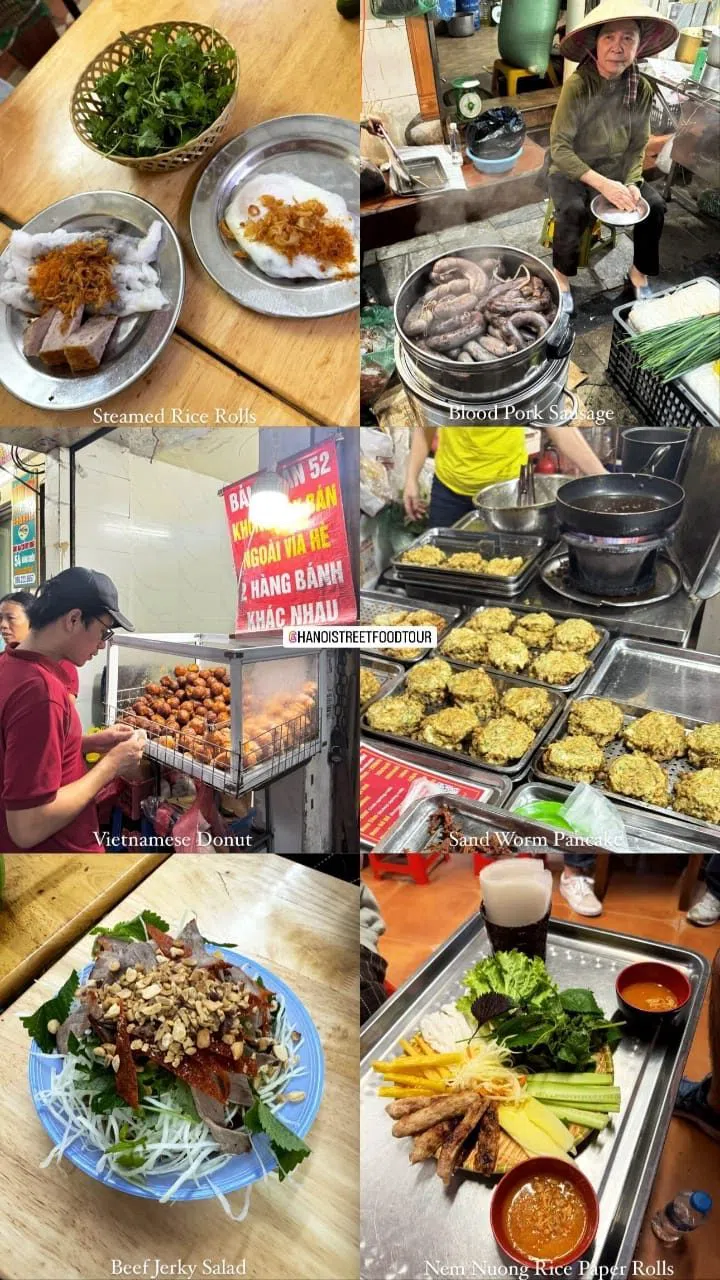
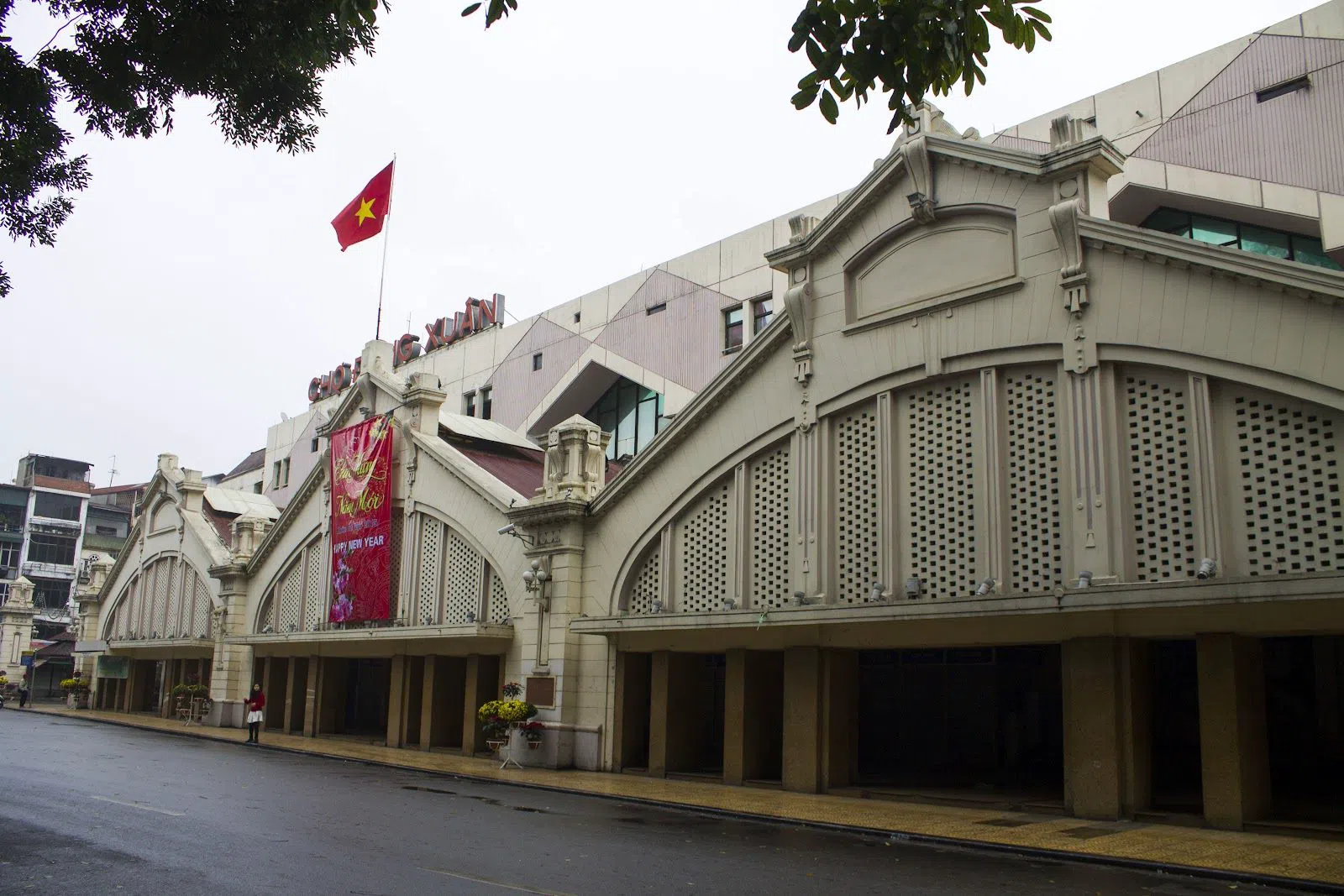
If you still have an hour in you, Dong Xuan Market (northern edge of the Old Quarter) sits a few minutes' walk away. The day market runs 06:00 to 18:00 and is free to enter, though the indoor aisles are tight and unforgiving with luggage or a group. The weekend night market is the easier version: it runs from Hang Dao up to the market gates, roughly 18:00 to 22:30 Friday to Sunday, with street food plates at 30,000 to 80,000 VND. Enter from the Hang Dao end and let the crowd carry you north.
The practical layer
Have Grab installed with a card attached before you fly; it covers the airport run and every short hop afterwards, and the in-app fare ends any argument. Bus 86 is the cheap alternative, 45,000 VND in cash, last departure 22:15. Inside the Old Quarter, walk, because distances are short and traffic makes cars slower than legs.
Bring cash and get more early. The bus conductor, the market plates, the beer stools and most street bowls are cash-only in Vietnamese dong; cards work at the sit-down restaurants, the theatre and the spa. Omamori's no-tipping rule is firm, so you do not need small notes there.
Do not sleep before 21:00, whatever your body argues. The workable shape is bags dropped by 09:00, an hour at the spa, pho or egg coffee, the lake loop late afternoon when the heat drops, a 18:00 puppet show or a rooftop hour, then the beer corner. That gets you to a normal bedtime on local time and buys back the whole of day two.
A first day, room excluded, runs roughly 800,000 to 1,200,000 VND (~US$32 to 48) per person, the spread between taking the bus in and taking a car, and between one ticketed sight and three. Nothing on this route needs booking more than a day or two ahead except Hanoikids, which wants a fortnight, and the Hoa Lo night tour, which sells its capacity out.
Before you go
What is the cheapest way to get from the airport into central Hanoi?
Bus 86, the Hanoi Airport Express, is 45,000 VND (~US$1.85) flat, paid in cash to the conductor on board. You do not need to book, and a group of any size can walk straight on, though the luggage racks fill quickly. It takes about fifty minutes to Hanoi Railway Station and runs 06:40 to 22:15. After that you need a car.
How much should a Grab cost from the airport to Hoan Kiem?
Roughly 280,000 to 420,000 VND (~US$12 to 18), plus a 15,000 to 25,000 VND airport surcharge that the app shows upfront. Install Grab and add a card before you fly. The pickup point at T2 is past Pillar 14. Groups with luggage want the GrabCar 7-seater, or two cars side by side with the fare split in-app.
What can I do before my hotel room is ready?
Leave your bags at the hotel and take an hour at Omamori Spa on Ngo Huyen, from 300,000 VND for sixty minutes, fixed prices and no tipping. Then breakfast pho at Pho Gia Truyen Bat Dan (open 06:00 to 10:00) or an egg coffee at Ca phe Giang, and the Hoan Kiem Lake loop once the afternoon heat eases.
Which first-day places actually work for a group of six?
Bun Cha Ta at 21 Nguyen Huu Huan takes bookings and has two floors of proper tables. At Bia Hoi Corner you drag the stools together, so arrive by 18:00 for a block of seats. Pho Gia Truyen Bat Dan and Ca phe Giang will split you across tables, and Hanoikids matches guides per booking, so a large party gets divided between several.
What should I book before I arrive in Hanoi?
Hanoikids wants about a fortnight's notice, and the Hoa Lo Prison Sacred Night tour (Friday to Sunday, 19:00, 399,000 to 499,000 VND) has limited places and sells out. Thang Long Water Puppet Theatre seats go a day or two ahead for weekend shows. Everything else on a first day (pho, egg coffee, the lake, bia hoi) is walk-in.